
Instructions
Download this document and answer the questions in it. Then, upload your answers to Box.
Remember to anonymize your submission. Your file name should contain only your Participant ID Number and the section number. For example, if your Participant ID Number is 103, your file name should be “SFD11_P103.docx.” Note that “SFD” stands for “Solar Farm Design.” Section 1.1 is abbreviated as 11. “P” stands for “Participant.”
Click here to return to Section 1.1 in the textbook.
Click here for Aladdin Reference Slides.
Practice Example: Solar Farm Design
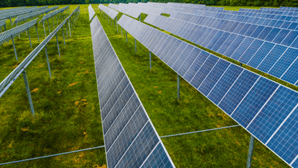
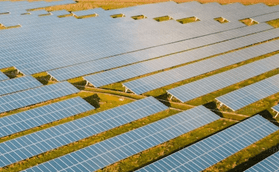
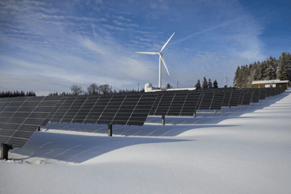
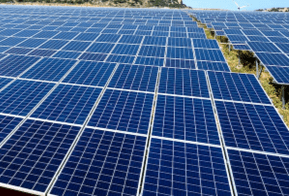
Solar farms are power stations that use a large number of solar panels to produce electricity. See below for some real-world examples:
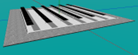
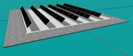
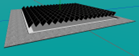
- Below are a few different computer models of solar farm designs in a rectangular plot:
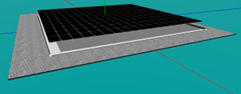
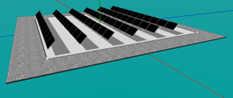
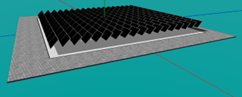
These designs can be categorized based on two design variables:
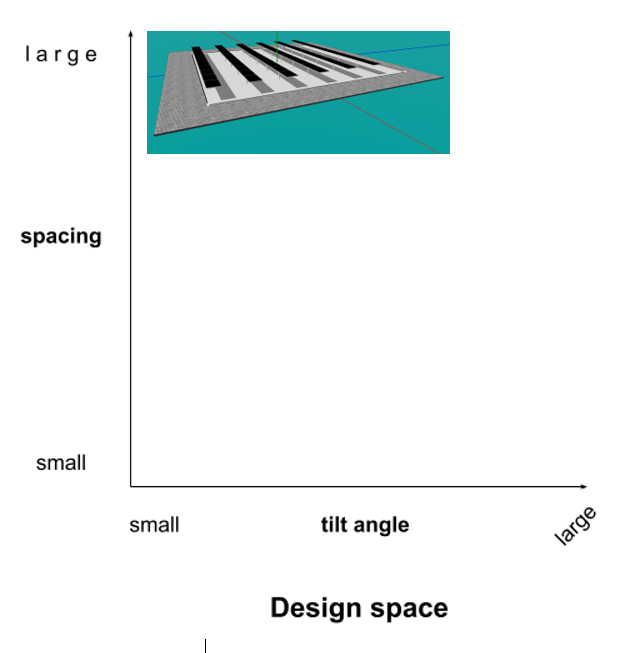
● The tilt angle of the solar panels (small angle being flat and large angle being vertical).
● The spacing between solar panels.
Identify where each design belongs in the design space below and drag the three images above to appropriate locations. One example (a flat and sparse design) has been provided for you.
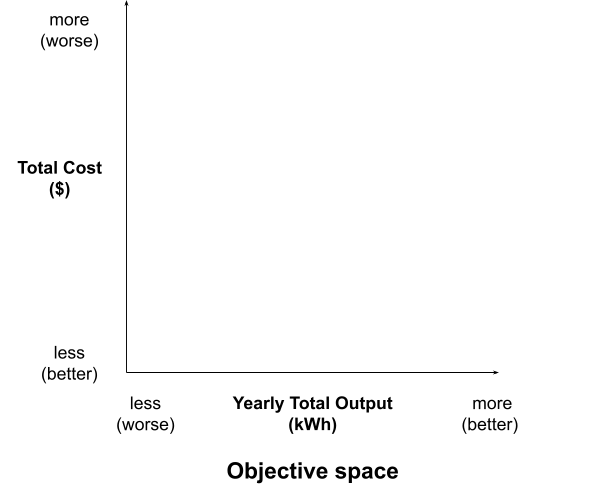
2. Despite the endless possibilities, solar farm design is far from arbitrary: the main objective is often to achieve the maximum energy output under the given constraints (such as land boundaries, budget, and location). For example, consider these two objectives:
● Maximize the total energy output of all solar panels,
● Minimize the total cost of all solar panels.
By dragging the images below, try to guess the performance of the same four designs as above and identify where they might fall along the objective space.

 SiDi LAB | Discover More