SiDi Research for Local Community – An Outreach Visit To Kealing Middle School

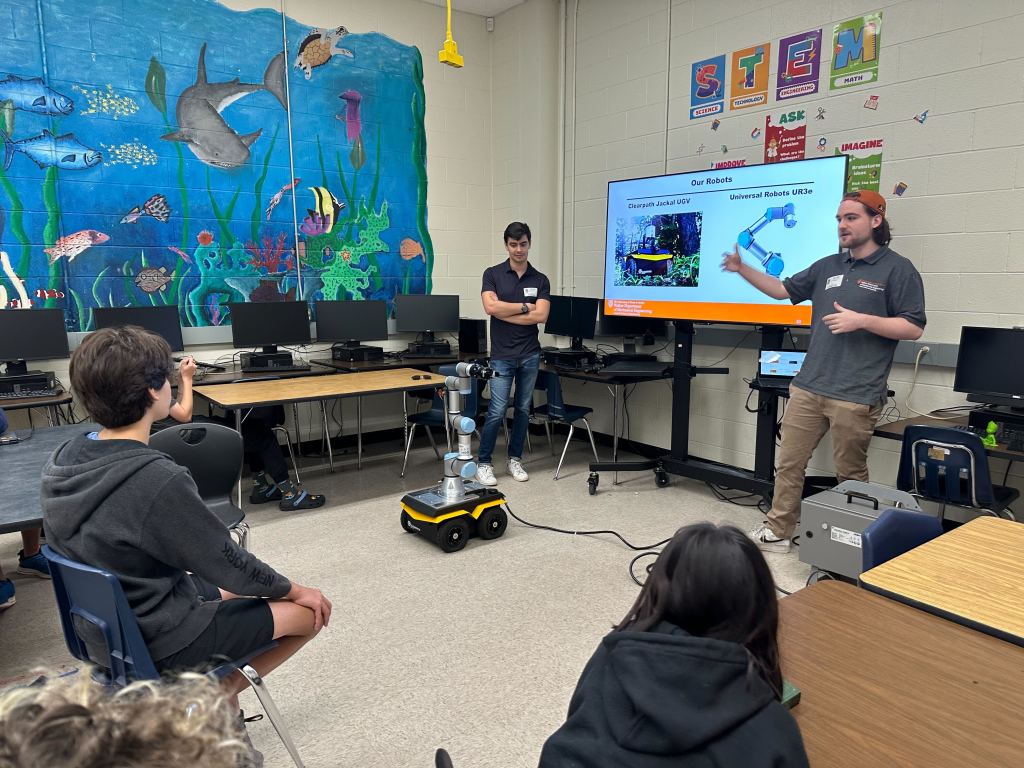
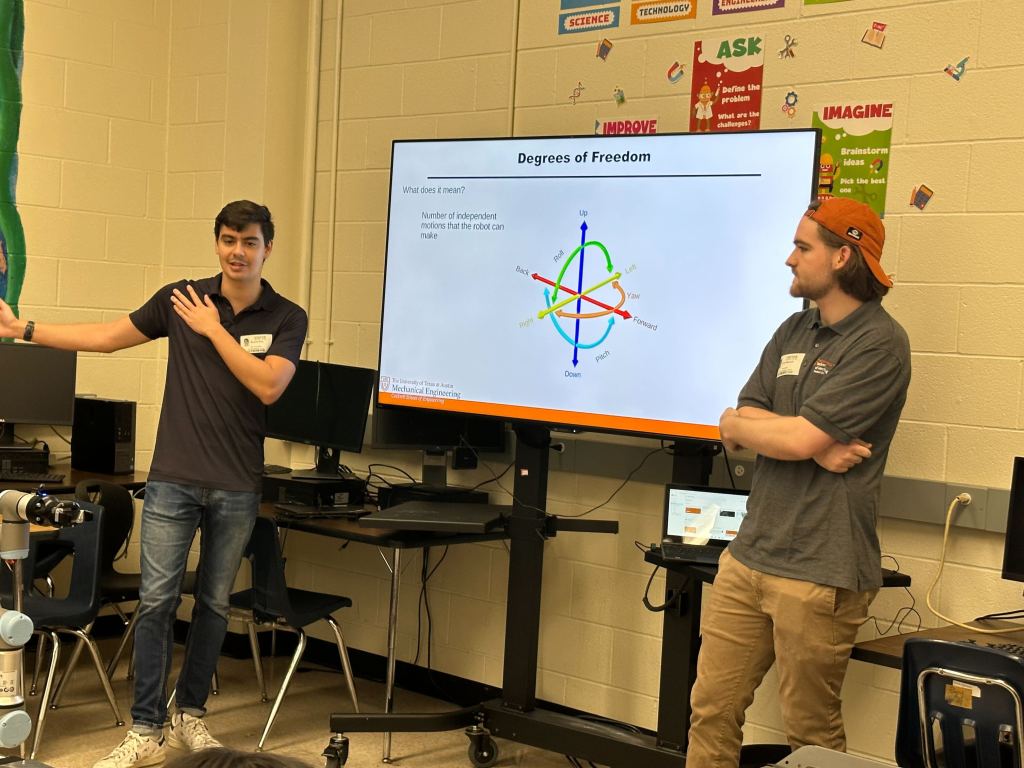
SiDi students, Ronnie Stone and Cole Mensch, provided a fun lecture to the students at Kealing Middle School to show the application of robotics in manufacturing and how the design of complex robotic systems can impact our daily lives. They demonstrated SiDi’s recent resarech outcomes of the Swarm Manufacturing project to the students and had a insighful discussion and communication in the class. Enjoy some photos and videos taken by Kiersten Fernandez, our Outreach Program Coordinator in the Cockrell School’s Diversity, Equity, and Inclusion Office.

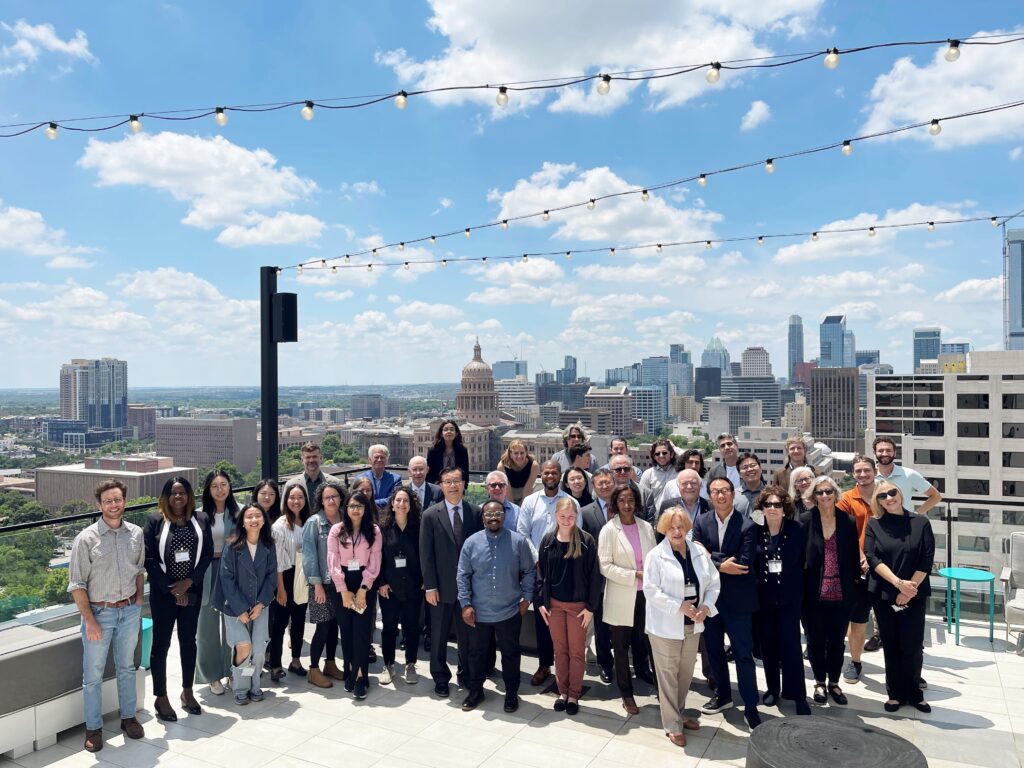
DOT Support to Investigate Uban Expansion in Texas Triangle Megaregion Using Network Science

Dr. Sha was recently invited to participate in the Annual Summer Forum held by The Cooperative Mobility for Competitive Megaregions (CM2) consortium at UT Austin. The multidisciplinary view fostered by the center was fascinating, and it was exciting to see how researchers from different fields integrate theories to tackle some of the most challenging problems in complex urban systems and future smart cities and mobility.

SiDi Lab received funding from the Department of Transportation (DOT) through the CM2 center to investigate the complex urban system and its expansion in the Texas Triangle of Dallas-Austin-Houston, one of the fastest-growing megaregions in the United States. In particular, the objective is to develop a complex network-based analysis framework in support of the investigation of the co-evolution of cross-system interactions (e.g., urban networks and transportation networks) in the Texas Triangle megaregion.

Students Were Having Fun Testing Their Drones for ME 366J: Design Methodology.

This semester (Spring 2023), I picked the course project topic of Drone Delivery System Design for ME 366J: Design Methodology. It is a challenging topic, and students did a fantastic job practicing the concepts and methods they learned from the classroom on Design Methodology, such as customer needs analysis, function modeling and decomposition, mind-mapping and 6-3-5 methods for brainstorming and ideation, design of experiments, design for X, etc. Enjoy a few videos shot during the project demonstration day below.

Our Research on Cooperative Additive Manufacturing Are Receiving Attention

Our recent work on Cooperative Additive Manufacturing, A.K.A. Cooperative 3D Printing (C3DP) was featured by Journal of Mechanical Design. Check out the featured article here: What can ants teach us about making better factories? The preprint of this article can be downloaded here: Decentralized and Centralized Planning for Multi-Robot Additive Manufacturing.

Meanwhile, our paper “A Generative Approach for Scheduling Multi-Robot Cooperative Three-Dimensional Printing” is among the top 20 most accessed (downloaded and viewed) articles in the ASME Journal of Computing and Information Science in Engineering in 2022.

Guest Lecture for Design Methodology Class

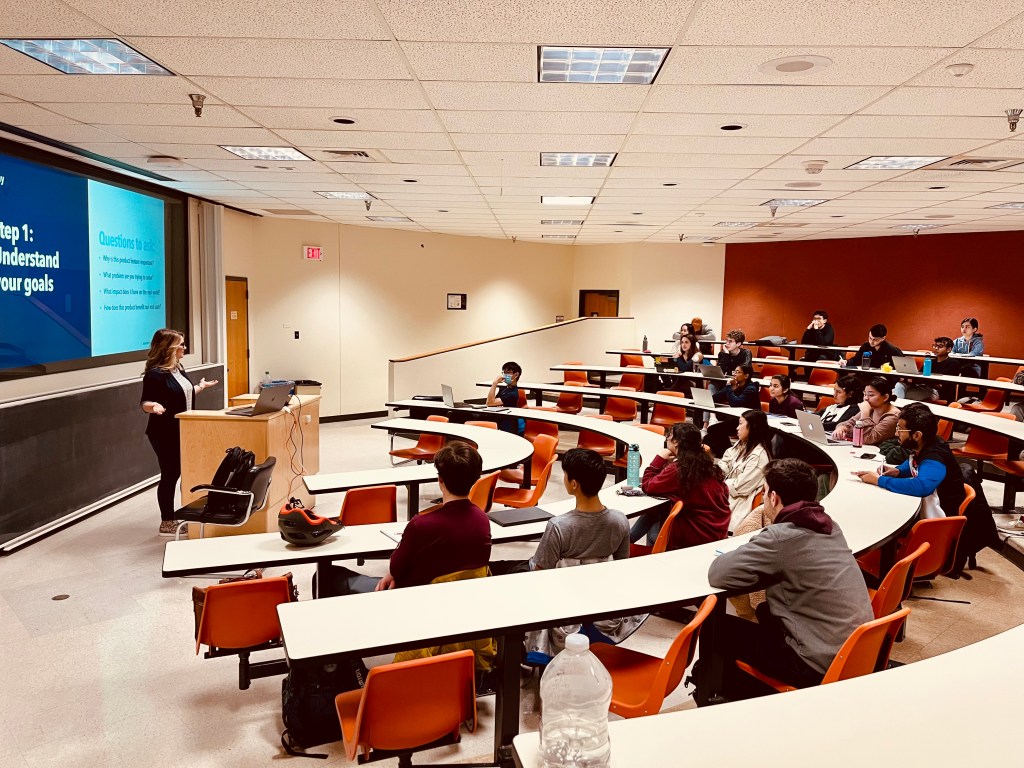
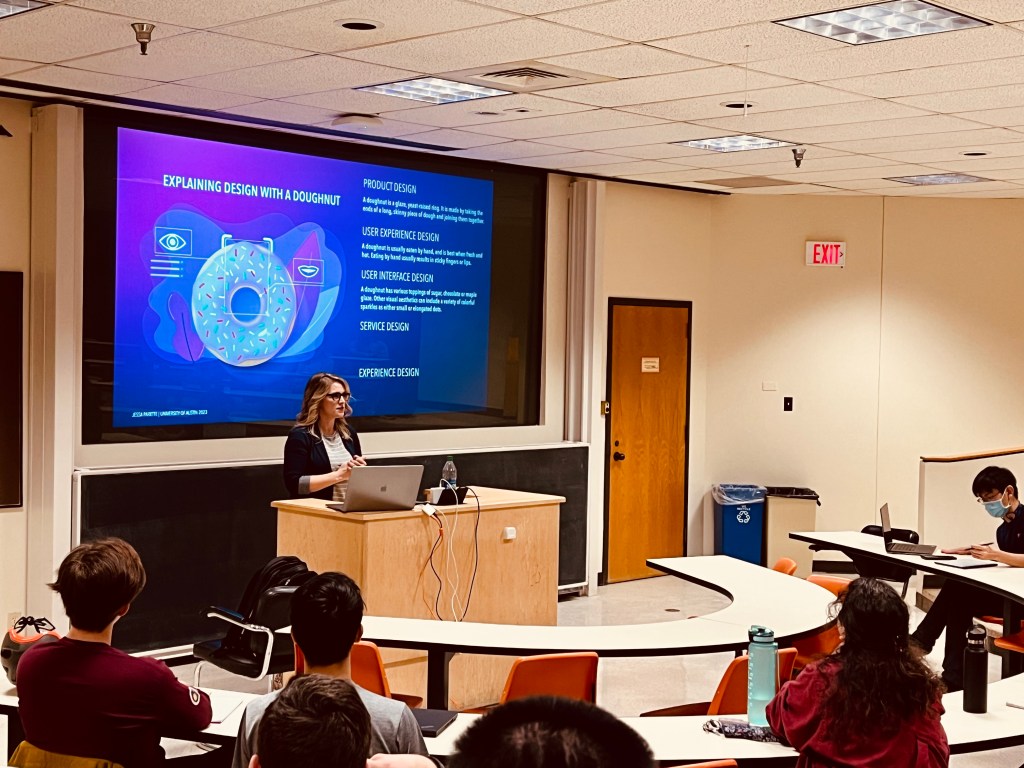
It was a great pleasure to host our guest speaker, Jessa Parette, the Senior Director of Research, Strategy & Design Systems at Capital One, to share her insights into design thinking methodologies in product development and customer needs analysis. Students had a great time discussing the questions they were interested in about their design practices, and I was very happy to see they were eager to link the knowledge learned from the classroom to the real world.

Dr. Sha Receives National ASME Award

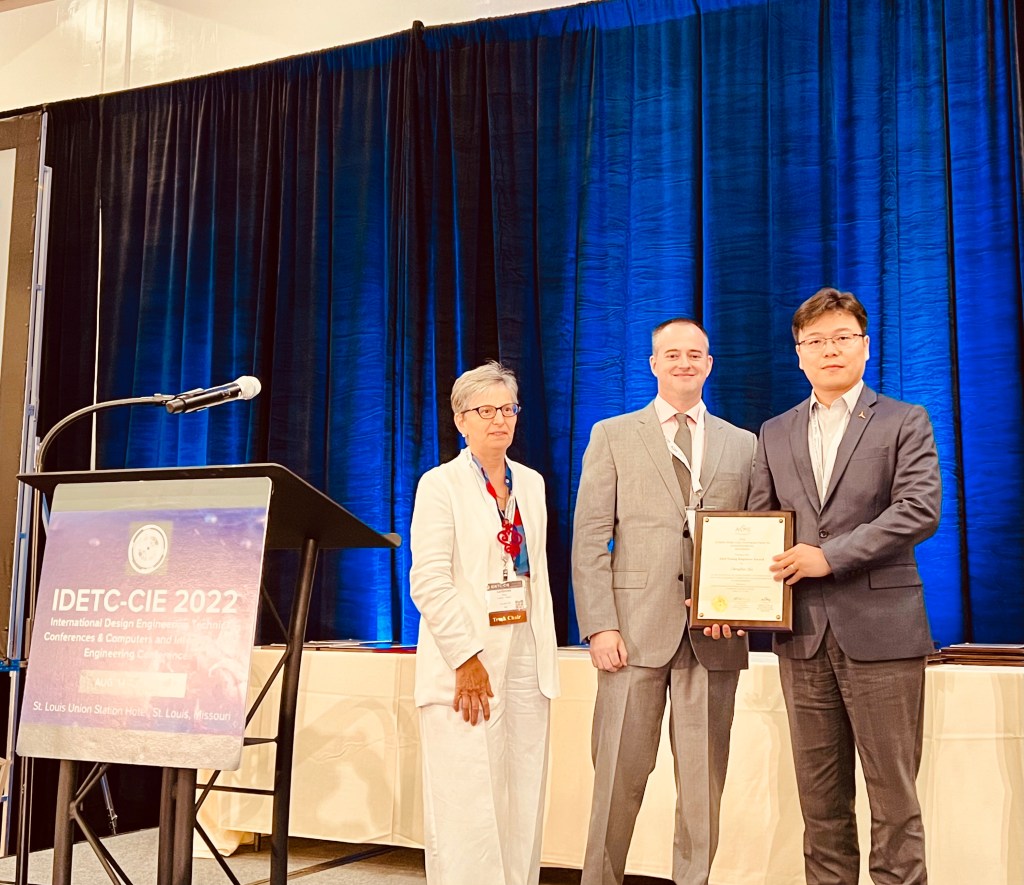
Dr. Zhenghui Sha received the national-level award at the ASME International Design Engineering Technical Conference this month.

The American Society of Mechanical Engineers held its annual International Design Engineering Technical Conference in St. Louis, Missouri.

Sha, assistant professor in the Walker Department of Mechanical Engineering, received the Young Engineer Award, which recognizes a promising young investigator who is making outstanding contributions to the progress in the application of computers in engineering.

Dr. Sha Joined the ASME SEIKM Technical Committee (TC) Panel to Discuss Data Science and Hackathon in Mechanical Engineering

The ASME SEIKM Technical Committee and the ASME CIE Hackathon Committee co-organized this year’s SEIKM Panel on the topic of “The Role of Hackathon Mechanism in Promoting Data Science in Mechanical Engineering Research and Education: Perspectives from Academia and Industry.” This panellists are Zhenghui Sha (UT Austin), Yan Lu (NIST), Ye Wang (Autodesk), and Daniele Grandi (Autodesk). They discussed 1) the ways and mechanisms to build academia-industry relationships in providing ME students with practical data-driven engineering problems and hands-on experiences, 2) how to train the data-literate mechanical engineers that can harness the data revolution in different engineering fields, and 3) the connection/gaps between data science education in the classroom and data science applications in industry.

The motivation of the ASME Hackathon initiative is to support an engaging and inclusive platform for researchers to practice data-driven discovery and explore new statistical and machine-learning techniques appropriate for the use of unstructured data that would be beneficial to mechanical engineering, and developing pathways to train the data-literate mechanical engineers that can harness the data revolution in different engineering fields.

Graduate Students Presented Papers and Posters at the IDETC/CIE Conference

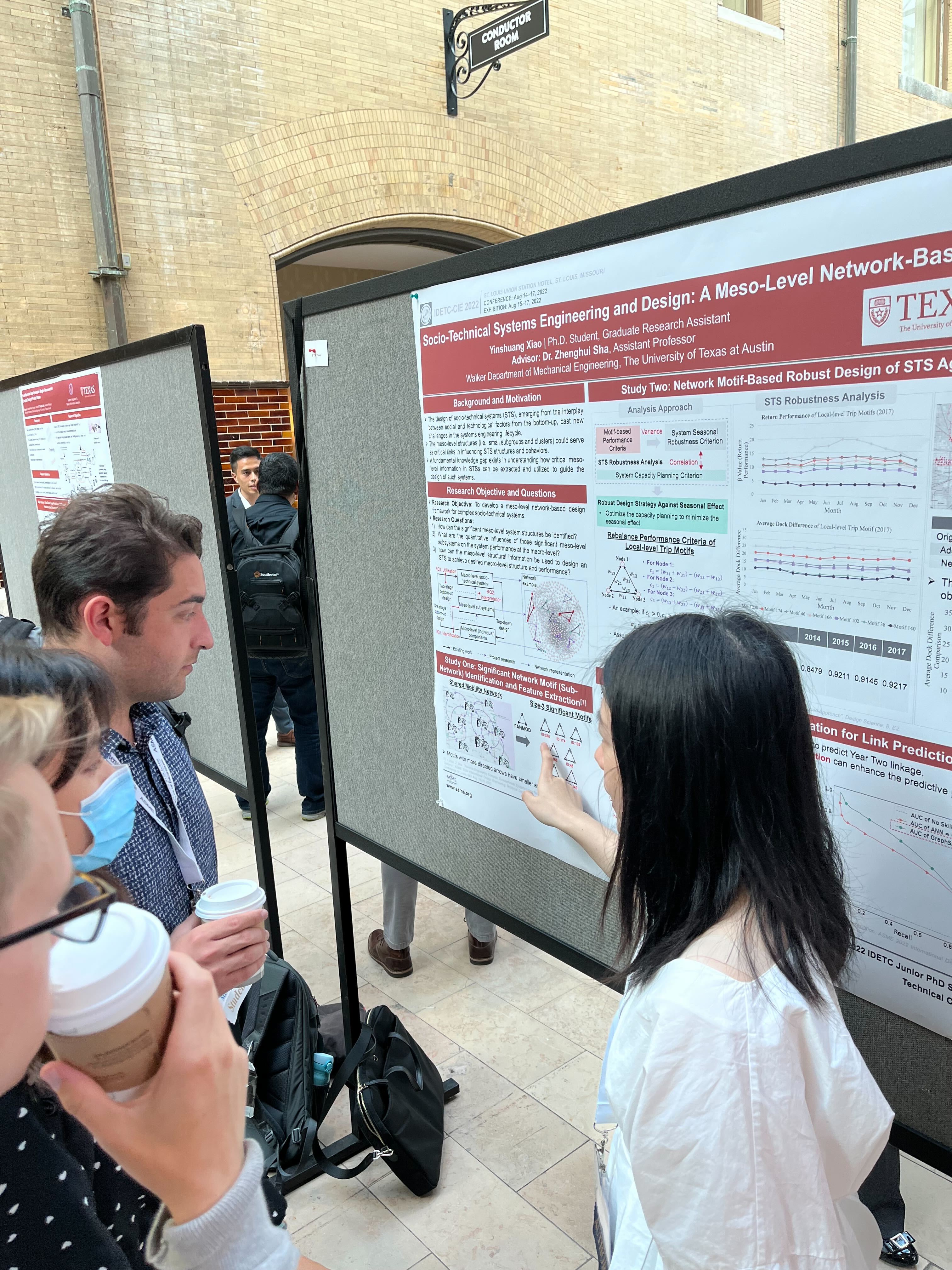
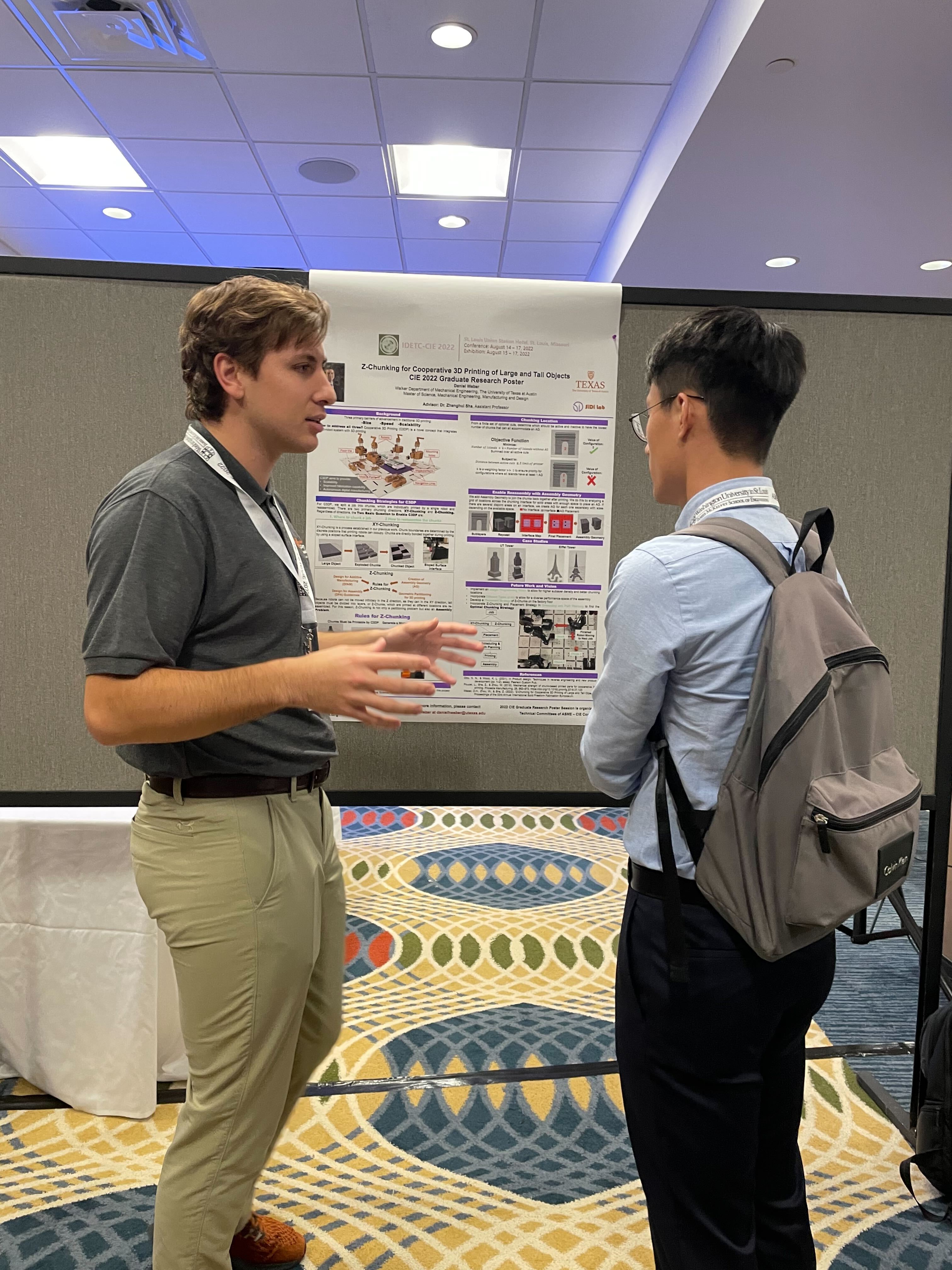
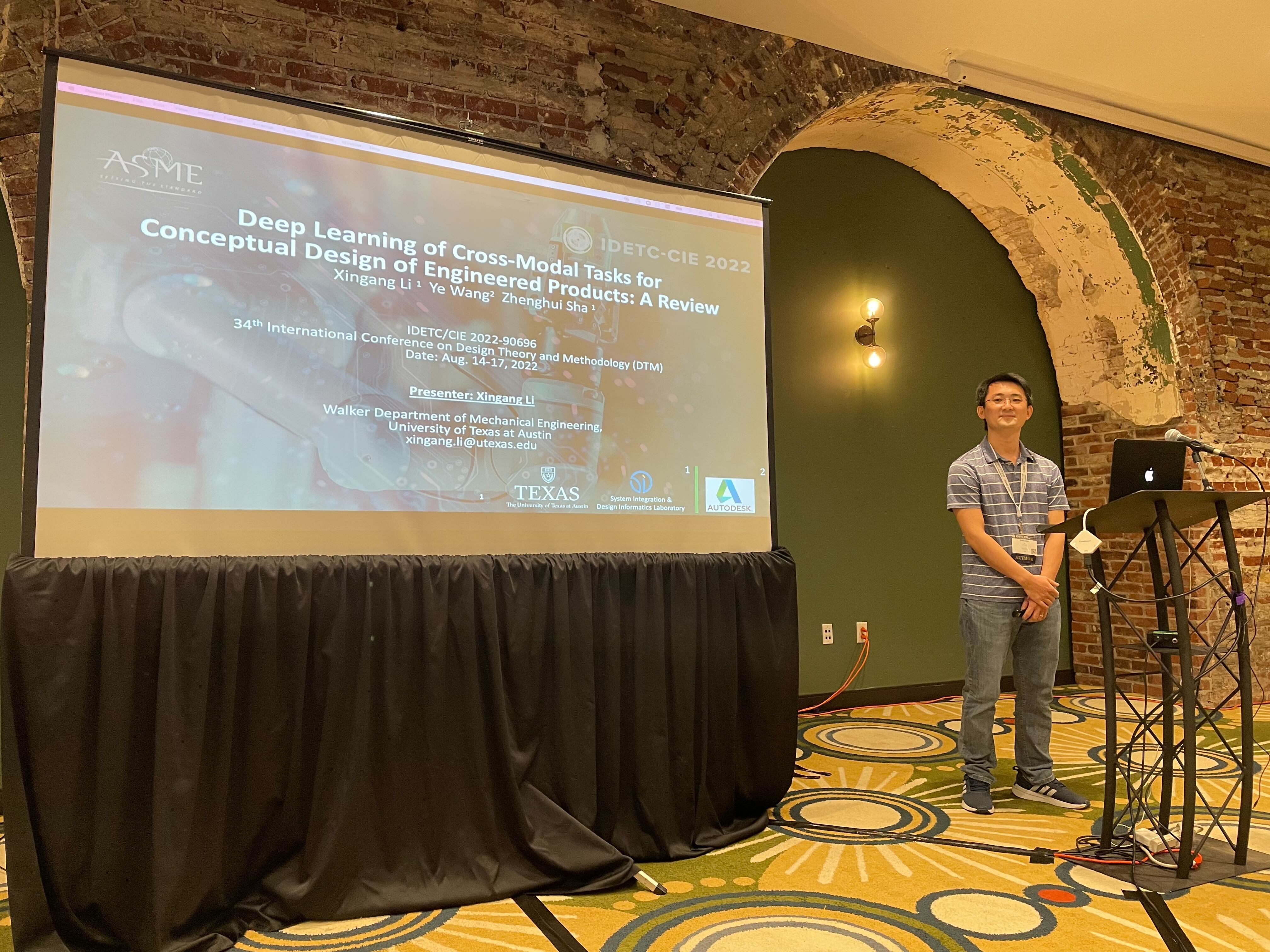
Three graduate students, Yinshuang Xiao, Xingang Li, and Daniel Weber, recently attended the 2022 IDETC/CIE conference in St. Louis, Missouri in person. Check their papers, posters and video presentations below.

Y. Xiao, F. Ahmed, Z. Sha, “Travel Links Prediction In Shared Mobility Networks Using Graph Neural Network Models,” ASME 2022 International Design Engineering Technical Conferences & Computers and Information in Engineering Conference, St. Louis, Missouri, Aug. 14-17, 2022.

X. Li, Y. Wang, Z. Sha, “Deep Learning of Cross-Modal Tasks for Conceptual Design of Engineered Products: A Review,” ASME 2022 International Design Engineering Technical Conferences & Computers and Information in Engineering Conference, St. Louis, Missouri, Aug. 14-17, 2022.

D. Weber, Z. Sha, “Z-Chunking for Cooperative 3D Printing of Large and Tall Objects,” CIE Graduate Research Poster Competition, ASME 2022 International Design Engineering Technical Conferences & Computers and Information in Engineering Conference, St. Louis, Missouri, Aug. 14-17, 2022.

Some pictures taken during their presentations:

Swarm Manufacturing of a Mini-Electrical Vehicle as a Demo for Future General Purpose Factories

Check our recent work on hybrid swarm manufacturing, collaborated with our partners at AMBOTS and Dr. Wenchao Zhou. This is a challenging topic that integrates knowledge from design for assembly (DfA), design for additive manufacturing (DfAM), manufacturing scheduling, and multi-robot path planning. The work was presented at the 2022 Symposium on Freefrom Fabrication (SFF) on Wednesday 07/27/2022. 

SiDi M.S. Student Presented the Work on Z-Chunking for C3DP

The M.S. student, Daniel Weber, presented his first conference paper “Z-Chunking for Cooperative 3D Printing (C3DP) of Large and Tall Objects” at the 2022 Solid Freeform Fabrication (SFF) Symposium. Check out the short video below.

Abstract: Cooperative 3D Printing (C3DP) is an emerging technology designed to address the size and printing speed limitations of conventional gantry-based 3D printers. To print large-scale objects, C3DP divides a job into chunks to be printed by a swarm of mobile robots. Previously, we developed a Chunker algorithm to partition jobs into printable parts in the XY direction, which theoretically enables the printing of objects of unlimited size in XY dimensions. However, print size is limited in the Z direction due to the physical constraints of the printer. In this paper, we introduce the first working strategy and rules of Z-Chunking for C3DP, such as where and how to place chunk boundaries along the Z direction and alignment geometries for easy post-assembly. Additional challenges of interfacing with XY chunking and facilitating re-assembly of the job are also considered. We conduct two case studies on objects of varying geometric complexity (e.g., simple solids vs. hollow structures) in which the object is chunked, printed, and assembled.