
Sha and Bayrak received a ~$675,000 award from the Air Force Office of Scientific Research for their proposal entitled “Trust, Rationality, and Robust Decision-making Under Competition in Human-Human and Human-AI Teams”. The goal of this project is to enable intelligent machines to perform as true “teammates,” adapting their behavior to accommodate changes in complex environments, as well as augmenting the performance of human teammates when needed. The objective is to investigate sequential human decisions in competitive teams in the presence of uncertainties due to incomplete and imperfect information. See the story from UT ME News for details.
Year: 2023
SiDi Lab Receved A New NSF Award
SiDi Lab was recently awarded by the National Science Foundation to support their investigation on the impact of information uncertainty on design rationality under competition among teams and to develop a competition-aware artificial intelligence (AI) assistant for future human-AI collaboration in design space exploration. This project, titled “Design Decisions under Competition at the Edge of Bounded Rationality: Quantification, Models, and Experiments,” is a collaborative research project with Dr. Alparslan Emrah Bayrak from the Stevens Institute of Technology. Dr. Bayrak will lead a sub project from Stevens and collaborate with Dr. Sha from UT Austin to address two fundamental issues in engineering design: design rationality and decision-making under competition.
Abstract:
The objective of this project is to investigate the impact of information uncertainty on design rationality under competition among teams and to develop a competition-aware artificial intelligence (AI) assistant for design space exploration and exploitation. Communication issues have been broadly recognized as a critical factor that impacts design outcomes in team decisions, because the information shared during communication can be incomplete and imperfect. Therefore, addressing such issues by understanding the role of information uncertainty on human design decisions in teams could lead to better coordination of team decisions, advancement in human-AI collaborations, and significant cost savings in large-scale engineering design projects. However, despite the significant progress in modeling design decision-making in teams, current literature neglects two fundamental aspects of the design process: human designers have bounded rationality, and most design activities happen under competition, whether consciously or unconsciously. This project is motivated to fill this gap by developing theoretical and experimental constructs to computationally model human designers’ sequential decisions in a competitive environment and to experimentally measure their bounded rationality. The expected outcome is a suite of new knowledge, including metrics, models, algorithms, and testbeds, on human behavior in design teams under competition in the presence of uncertainties. Broader impacts will be generated by directly engaging diverse undergraduate students in research activities through the Freshman Introduction to Research in Engineering (FIRE) program at the University of Texas at Austin and the Pinnacle and Clark Scholars programs at Stevens Institute of Technology.
This project is driven by answering two research questions: 1) what are the effects of information uncertainty (e.g., when design information shared between team members is incomplete) on design rationality under competition among teams? 2) How would such effects differ across a wider range of team sizes? To answer the two questions, an interdisciplinary research approach is planned that combines descriptive, prescriptive, and predictive analytics. In particular, we will develop game theoretic models to model sequential design decisions under competition, synergistically integrating two types of sequential learning models, i.e., theory-driven prescriptive models (e.g., Bayesian optimization) and data-driven predictive models (e.g., long-short term memory units). The new approach explicitly models designers? perceptions of their opponents? past performance and predicts the opponent?s future decisions, thereby providing a quantitative way to study the influence of uncertain information shared among designers in a team on their decisions in competition against other teams. Experiments will be conducted to collect behavioral data to study how human irrationality, benchmarking on rational behaviors predicted by the theoretical models, would change over time during the course of the design competition. The research findings will be validated in a real-world design challenge on solar system design, where multiple teams compete for awards. To benefit a broader research community, this project will build an open design infrastructure to share the project data and findings.
2023 IDETC/CIE Conference Takeaways
It was again a successful conference for design engineers and researchers to gather together in Boston this year exchanging ideas and sharing their most recent work and discoveries. Good memories collected!
SiDi Lab had four students attended the conference this year and presented the following three papers:
- R. Stone, W. Zhou, E. Akleman, V. Krishnamurthy, Z. Sha, “Print as a Dance Duet: Communication Strategies for Collision-Free Arm-Arm Coordination in Cooperative Three-Dimensional Printing,” ASME 2023 International Design Engineering Technical Conferences & Computers and Information in Engineering Conference, Boston, MA, Aug. 20-23, 2023.
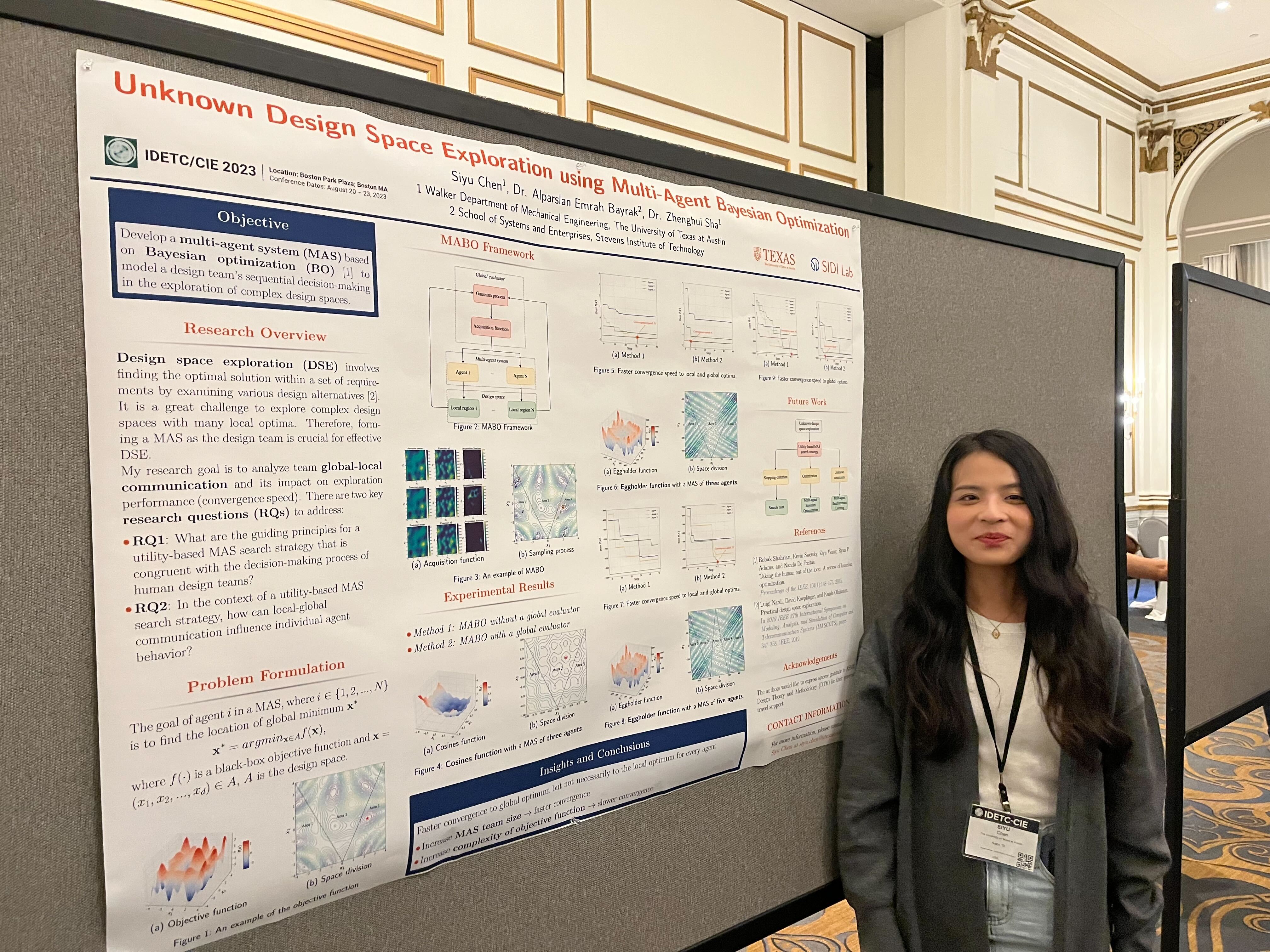
- S. Chen, A. E. Bayrak, Z. Sha, “Multi-Agent Bayesian Optimization for Unknown Design Space Exploration,” ASME 2023 International Design Engineering Technical Conferences & Computers and Information in Engineering Conference, Boston, MA, Aug. 20-23, 2023.
- P. Gavino, Y. Xiao, Y. Cui, W. Chen, Z. Sha, “Evolutionary Co-Mention Network Analysis via Social Media Mining,” ASME 2023 International Design Engineering Technical Conferences & Computers and Information in Engineering Conference, Boston, MA, Aug. 20-23, 2023.
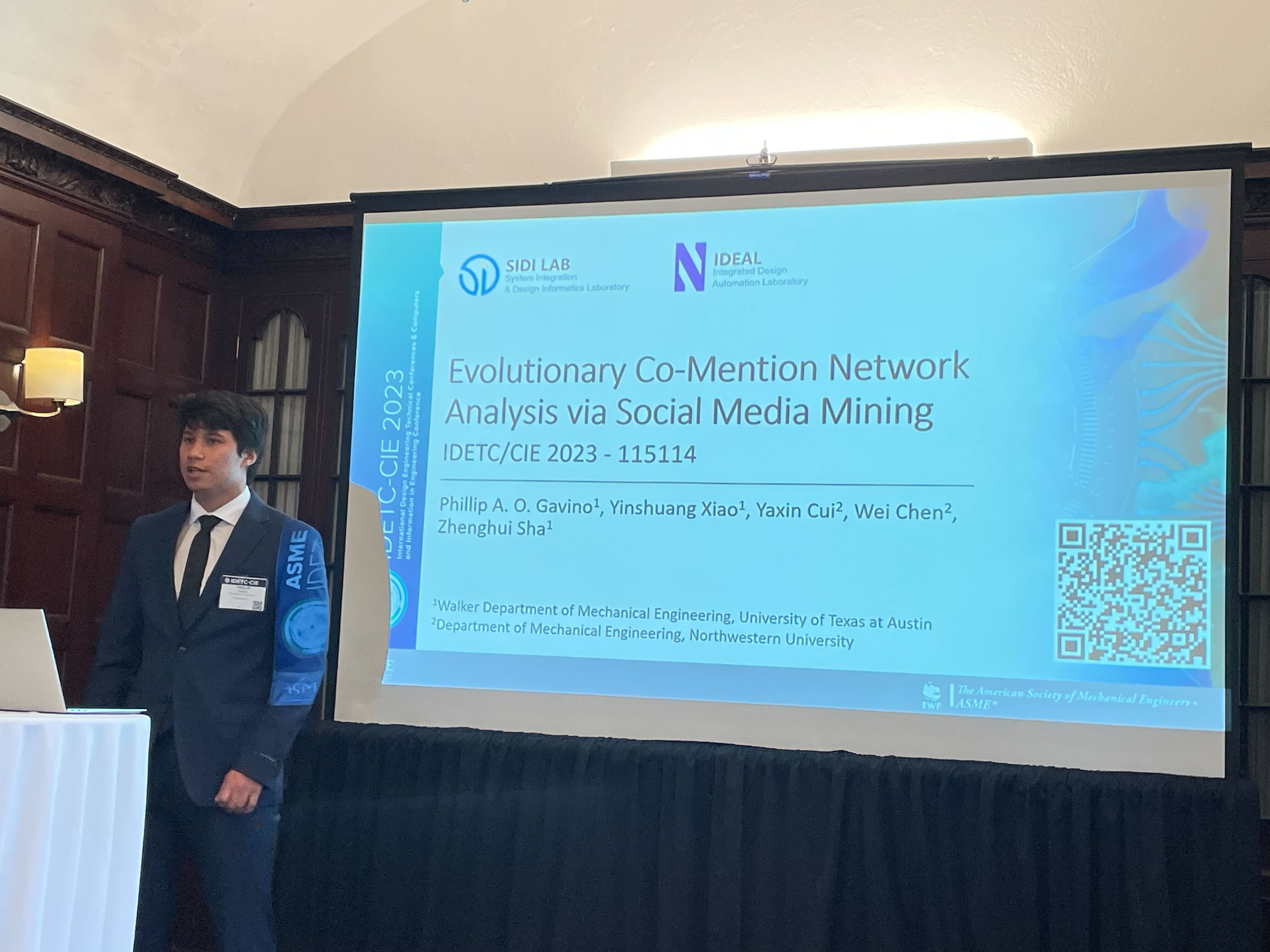
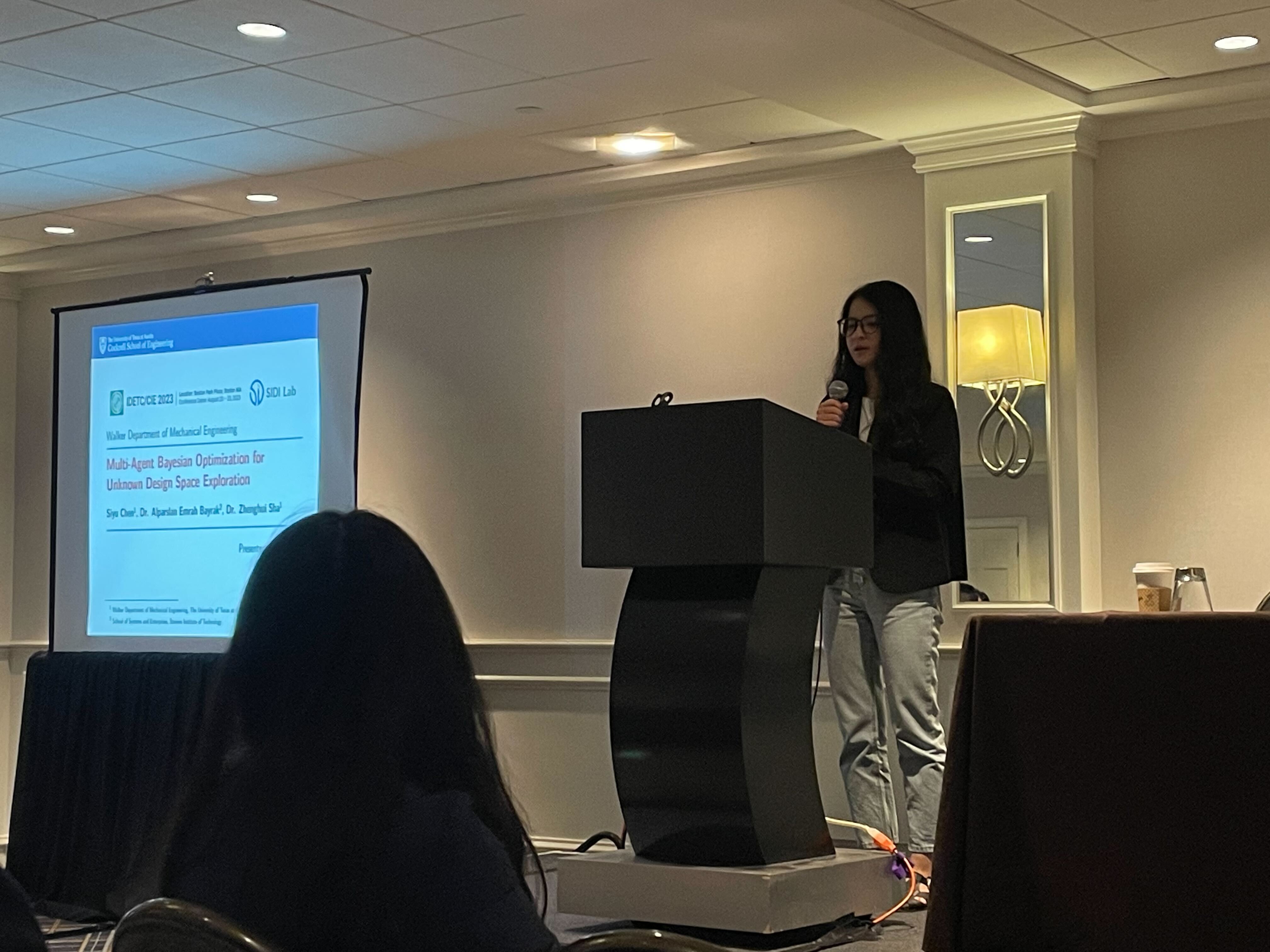
We were also glad to work with Dr. Kentaro Yaji’s group from Osaka University to report the work on multifidelity topology design at this year’s conference.
- T. Kii, K. Yaji, K. Fujita, Z. Sha, C. C. Seepersad, “Data-Driven Multifidelity Topology Design With a Latent Crossover Operation,” ASME 2023 International Design Engineering Technical Conferences & Computers and Information in Engineering Conference, Boston, MA, Aug. 20-23, 2023.
We would like to take the opportunity to congratulate the following SiDi Lab members on receiving competitive awards from various activities organized at the conference.
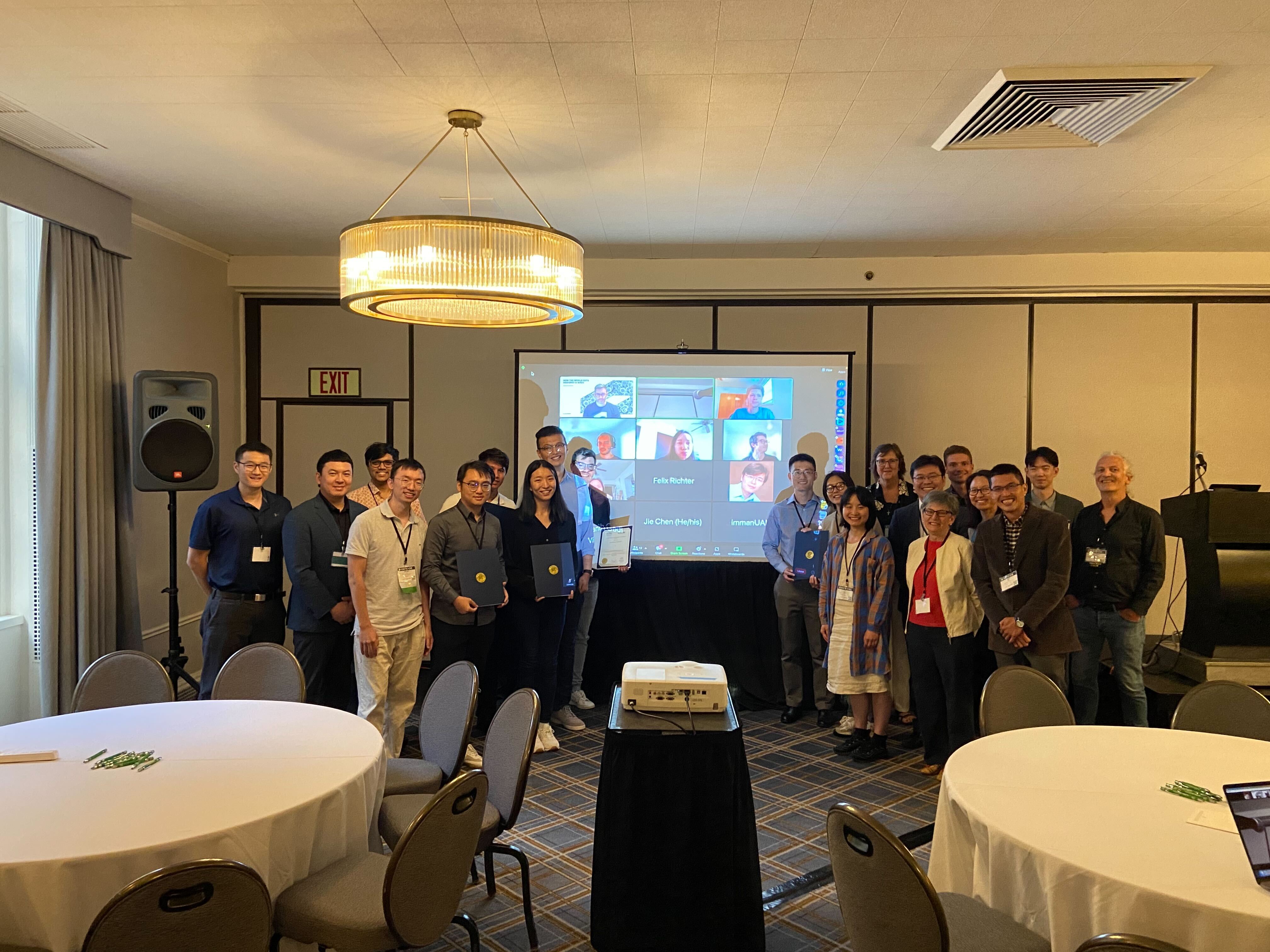
- Ronnie Stone and Phillip Gavino: Runner-up for the 2023 ASME Hackathon
- Ronnie Stone: Computers and Information in Engineering 2023 Student Poster Session Award for the poster Toward Swarm Manufacturing: Developing a Multi-Robot Cooperative Framework for Complex Manufacturing Tasks.
- Siyu Chen: Top-10 Broadening Participation (B-Part) Poster Presentation at the ASME 35th International Conference on Design Theory and Methodology for the poster Unknown Design Space Exploration using Multi-Agent Bayesian Optimization.


Lastly, I am very happy to see the reunion of ASME Hackathon Committee members and the growth of ASME Hackathon community. We look forward to the 2024 hackathon in Washington DC.

SiDi Students Won Several Awards Recently. Congratulations!
Congratulations to the following SiDi students on winning competitive and pretigous awards. Well-deserved!
Xingang Li: Philip C. and Linda L. Lewis Foundation Graduate Fellowship, awarded by the Cockrell School of Engineering at UT Austin
Phillip Gavino: Travel Award, 2023 ASME Undergraduate Poster Session on Dynamics, Vibration & Acoustics, awarded by The American Society of Mechanical Engineers (ASME) Design Engineering Division (DED)
Phillip Gavino: Robert L. Mitchell Friend of Alec Excellence Fund Scholarship, awarded by the Cockrell School of Engineering, UT Austin
Siyu Chen: NSF Travel Award, The 2023 Frontiers in Design Representation (FinDeR) Summer School held at the University of Maryland, College Park, awarded by the National Science Foundation
Siyu Chen: Travel Award for Top-10 Abstracts, 2023 DTM Student Poster Session, awarded by The American Society of Mechanical Engineers (ASME) Design Theory and Methododology (DTM) Technical Committee
Ronnie Stone: Travel Award, The ASME-CIE Graduate Research Poster Session, awarded by The American Society of Mechanical Engineers (ASME) Computers and Information in Engineering Division (CIE)
Ronnie Stone: 2023 NSF SFF Registration Fee Waiver Award, The Thirty-Fourth Annual International Solid Freeform Fabrication Symposium
Vanishree Shanmugasundaram: Freshman Introduction to Research in Engineering (FIRE) Research Scholarship, awarded by the Walker Department of Mechanical Engineering, UT Austin
Pawornwan Thongmak, Graduate Dean’s Prestigious Fellowship Supplement, awarded by the Graduate School, UT Austin
SiDi Research for Local Community – An Outreach Visit To Kealing Middle School
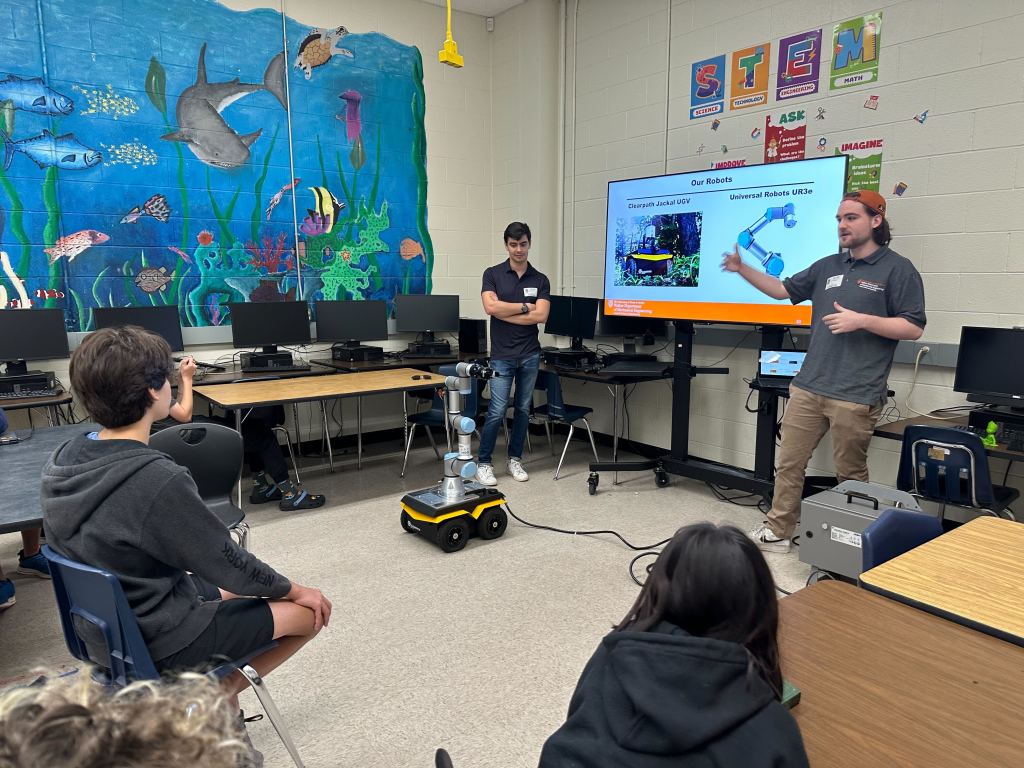
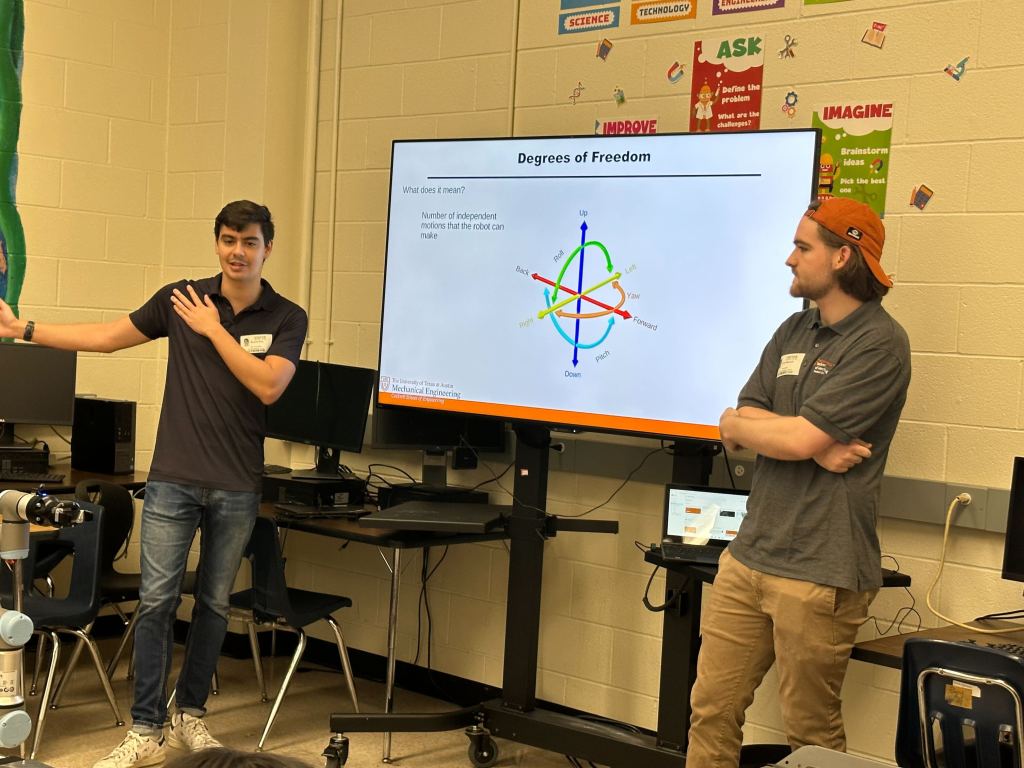
SiDi students, Ronnie Stone and Cole Mensch, provided a fun lecture to the students at Kealing Middle School to show the application of robotics in manufacturing and how the design of complex robotic systems can impact our daily lives. They demonstrated SiDi’s recent resarech outcomes of the Swarm Manufacturing project to the students and had a insighful discussion and communication in the class. Enjoy some photos and videos taken by Kiersten Fernandez, our Outreach Program Coordinator in the Cockrell School’s Diversity, Equity, and Inclusion Office.

DOT Support to Investigate Uban Expansion in Texas Triangle Megaregion Using Network Science
Dr. Sha was recently invited to participate in the Annual Summer Forum held by The Cooperative Mobility for Competitive Megaregions (CM2) consortium at UT Austin. The multidisciplinary view fostered by the center was fascinating, and it was exciting to see how researchers from different fields integrate theories to tackle some of the most challenging problems in complex urban systems and future smart cities and mobility.
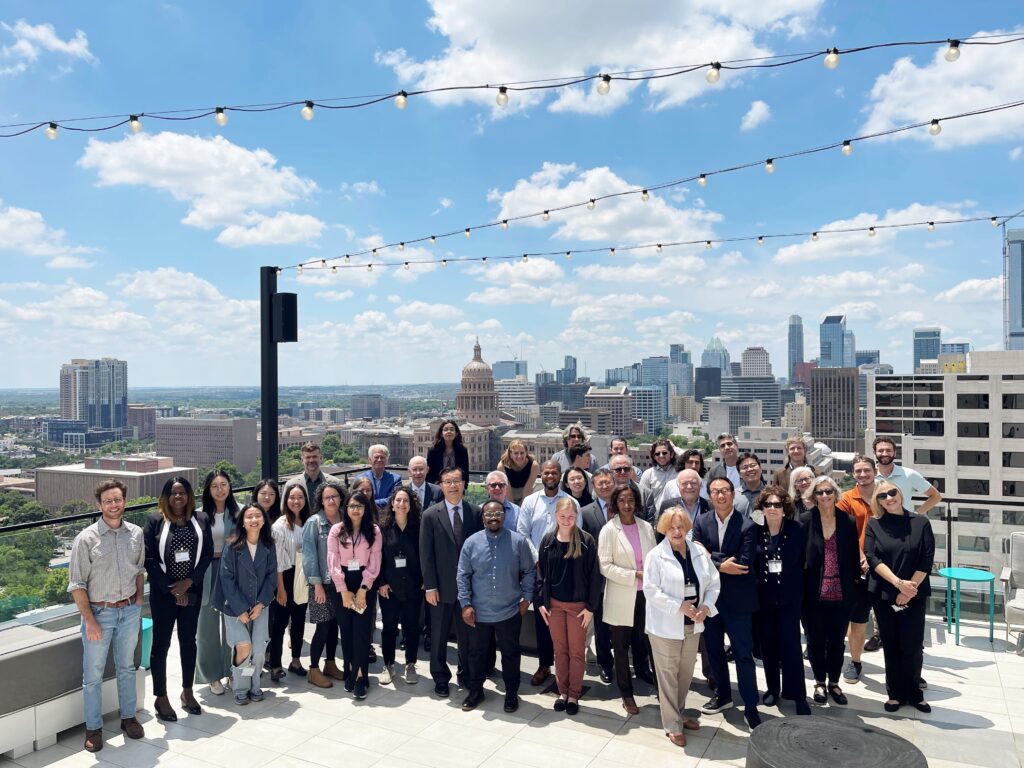
SiDi Lab received funding from the Department of Transportation (DOT) through the CM2 center to investigate the complex urban system and its expansion in the Texas Triangle of Dallas-Austin-Houston, one of the fastest-growing megaregions in the United States. In particular, the objective is to develop a complex network-based analysis framework in support of the investigation of the co-evolution of cross-system interactions (e.g., urban networks and transportation networks) in the Texas Triangle megaregion.
Students Were Having Fun Testing Their Drones for ME 366J: Design Methodology.
This semester (Spring 2023), I picked the course project topic of Drone Delivery System Design for ME 366J: Design Methodology. It is a challenging topic, and students did a fantastic job practicing the concepts and methods they learned from the classroom on Design Methodology, such as customer needs analysis, function modeling and decomposition, mind-mapping and 6-3-5 methods for brainstorming and ideation, design of experiments, design for X, etc. Enjoy a few videos shot during the project demonstration day below.
Our Research on Cooperative Additive Manufacturing Are Receiving Attention
Our recent work on Cooperative Additive Manufacturing, A.K.A. Cooperative 3D Printing (C3DP) was featured by Journal of Mechanical Design. Check out the featured article here: What can ants teach us about making better factories? The preprint of this article can be downloaded here: Decentralized and Centralized Planning for Multi-Robot Additive Manufacturing.
Meanwhile, our paper “A Generative Approach for Scheduling Multi-Robot Cooperative Three-Dimensional Printing” is among the top 20 most accessed (downloaded and viewed) articles in the ASME Journal of Computing and Information Science in Engineering in 2022.
Guest Lecture for Design Methodology Class
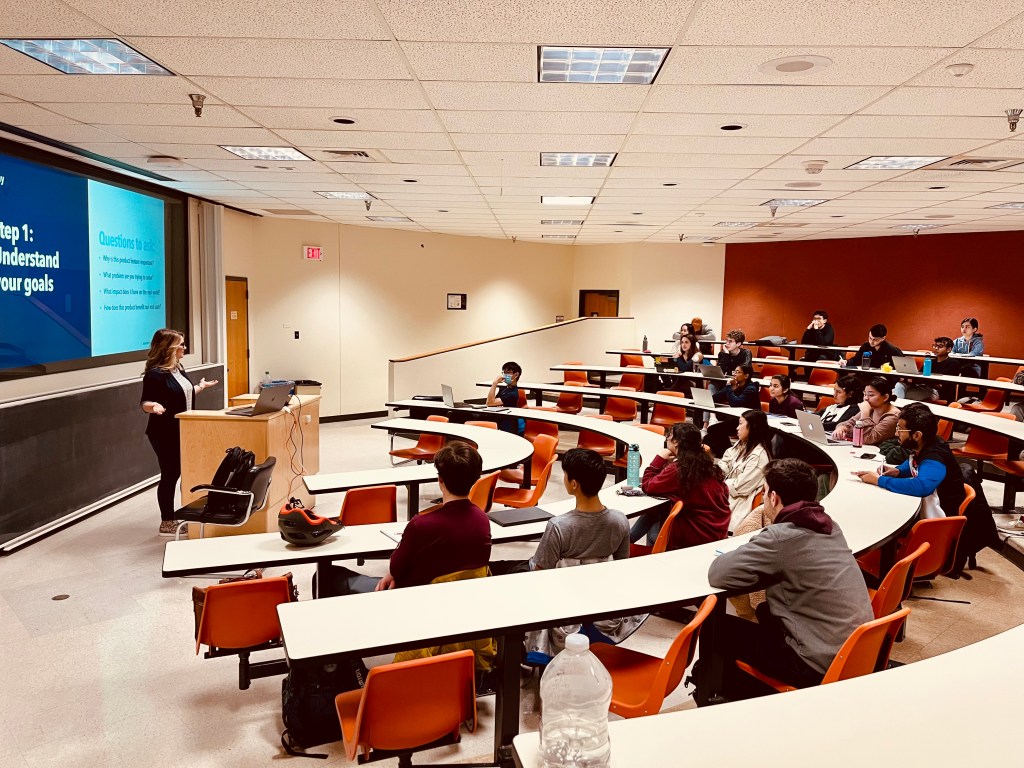
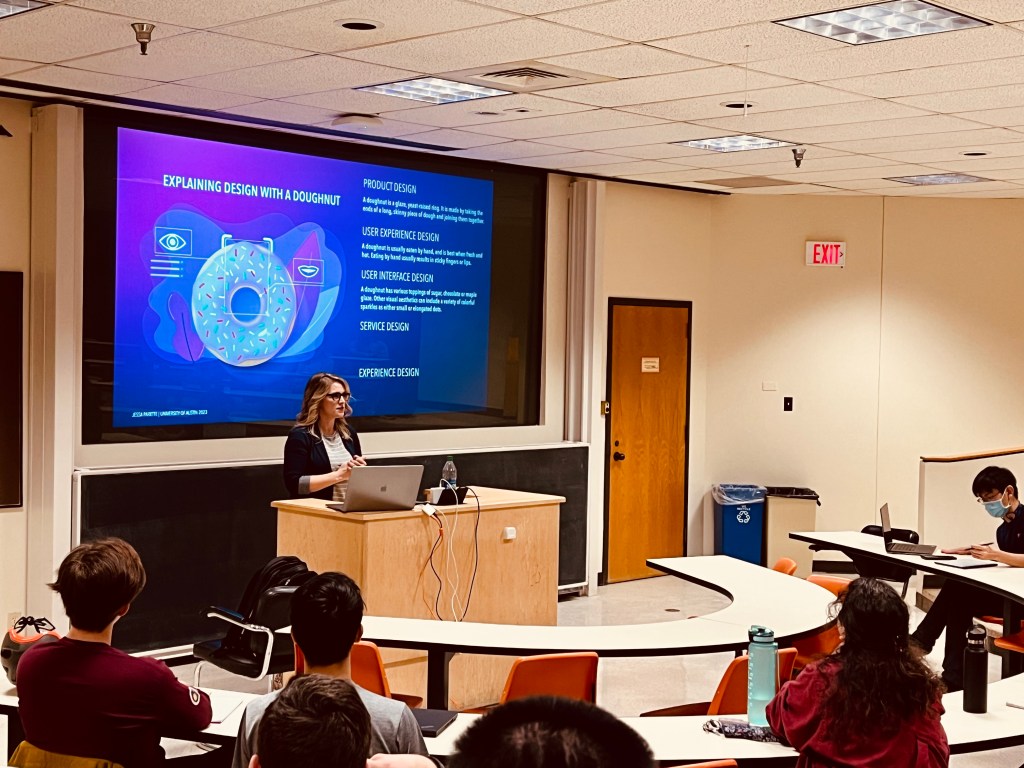
It was a great pleasure to host our guest speaker, Jessa Parette, the Senior Director of Research, Strategy & Design Systems at Capital One, to share her insights into design thinking methodologies in product development and customer needs analysis. Students had a great time discussing the questions they were interested in about their design practices, and I was very happy to see they were eager to link the knowledge learned from the classroom to the real world.
 SiDi LAB | Discover More