Comparing Generative, Parametric, and Traditional Design Thinking in Engineering Education

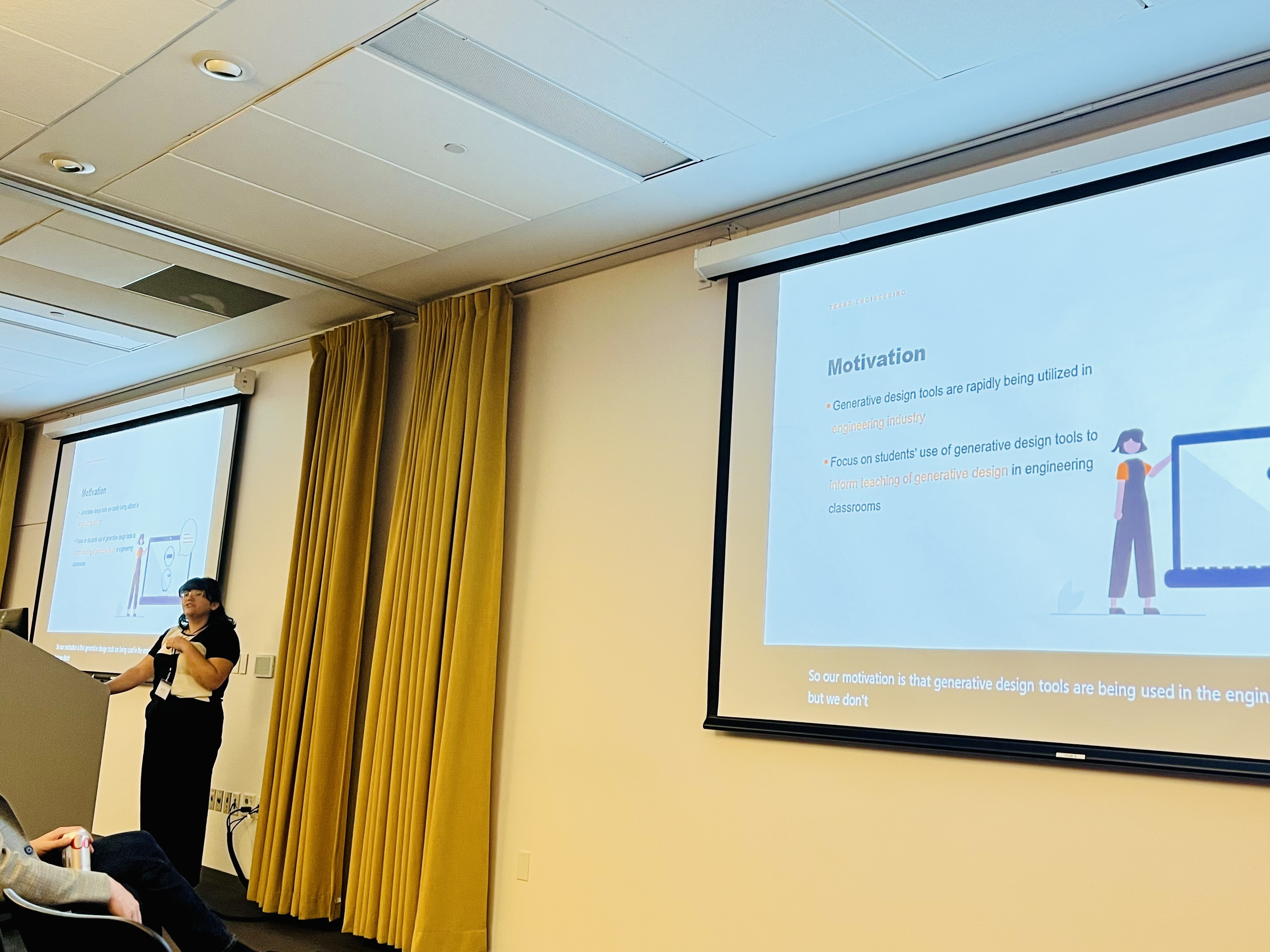
Elisa Koolman, a PhD student co-advised by Dr. Sha and Dr. Maura Borrego, recently presented our paper on “A multi-case study of traditional, parametric, and generative design thinking of engineering students.”

Abstract: The recent surge in generative artificial intelligence (AI) applications within engineering design requires equipping future engineers with the skills to effectively utilize these advanced design tools. Understanding how students think about generative AI in design is pivotal in shaping engineering design education. This study aims to explore mechanical engineering students’ perceptions and approaches to generative design (GD) compared to parametric design (PD) and traditional design (TD). To achieve this, a comprehensive curriculum encompassing these three design paradigms was developed and administered to seven undergraduate mechanical engineering students. Students engaged with the curriculum activities while their responses and interactions were recorded using a verbal protocol. Three students were selected for an in-depth multi-case study analysis. The qualitative and quantitative findings suggest that students’ thought processes and behaviors in GD are influenced and informed by their experiences and understanding of TD and PD.
Paper Featued by ASME Journal of Mechanical Design

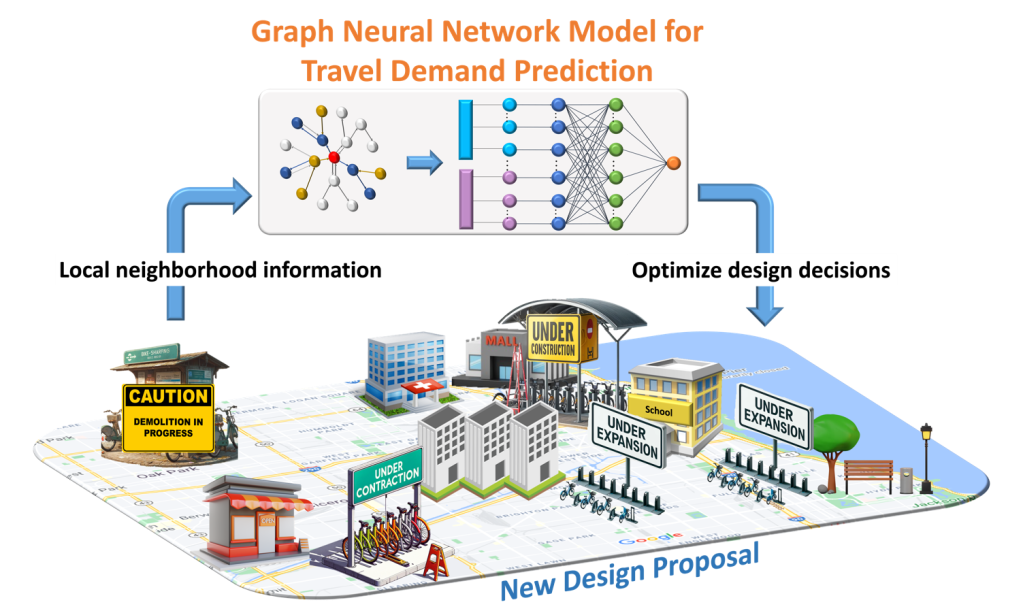
Are you struggling to find available docks to return your bikes or frustrated with finding no charging ports in a charging station for your EVs? Our future mobility systems require better simulation and prediction to support systems design decisions, such as station locations and capacities. Our recent study, led by Yinshuang Xiao and collaborated with Dr. Faez Ahmed, using cutting-edge graph neural networks to improve demand prediction in shared mobility networks was featured by ASME Journal of Mechanical Design. Let us rev up shared mobility for a greener and smarter commute!

Emerging shared mobility systems are gaining popularity because of their cost-effectiveness and positive environmental impact. In designing such urban transportation networks, questions such as where a station should be constructed and how much capacity it should offer are essential because they influence system usage, adoption rate, and return on investment. In this study, we develop a cutting-edge method using graph neural networks to support the design decision-making of shared mobility systems, like bike-sharing programs. One uniqueness of this method is that it accounts for the neighborhood information of a station, such as shopping malls or schools, in the formulation of node embedding in training the graph neural networks. When predicting if there are sufficient demands between stations, our results indicate the proposed method has superior performance, thus offering practical guidance for optimizing station locations and capacities. Our model can be readily transformed into a simulation tool or integrated into a decision-support platform for the design of more efficient and sustainable shared mobility networks.

Special Issue on Networks and Graphs for Engineering Systems and Design

ASME JCISE invites submissions to the Special Issue on Networks and Graphs for Engineering Systems and Design, guest edited by Zhenghui Sha, Astrid Layton, Babak Heydari, Megan Konar, and Douglas L. Van Bossuyt. This special issue is dedicated to promoting the dissemination of knowledge related to complex networks in engineering systems and design and highlighting the latest advances at the intersection of network science, graph theory, and engineering. Submissions are due September 30, 2024.

https://www.asme.org/publications-submissions/journals/administration/call-for-papers/special-issue-on-networks-and-graphs-for-engineering-systems-and-design

Abstract

In the ever-evolving landscape of engineering, the fusion of network science and graph theories has emerged as a dynamic force, revolutionizing the way we represent, design, model, and optimize complex systems. Networks, defined by nodes and edges, are particularly effective in modeling the interaction and interdependency among individual entities in complex systems. Networks have become the cornerstone for comprehending the intricate relationships underlying a myriad of engineering domains. From transportation networks optimizing urban mobility, power grids ensuring energy efficiency and resilience, and social networks shaping human interactions to biological networks inspiring human-engineered system design, the application of network science and graphs in engineering spans a vast spectrum of disciplines.

Topic Areas

THE SCOPE OF THIS ISSUE INCLUDES BUT IS NOT LIMITED TO:

  • Network analysis, modeling, and visualization for sociotechnical systems
  • Graph neural networks for systems engineering, prediction, and design
  • Ecological/biological network-inspired system engineering and design
  • Complex networks and artificial intelligence (AI), e.g., link prediction and optimization problems 
  • Domain-specific networks and systems: design and manufacturing, food-energy-water nexus, supply chain, IoT, and inter-connected infrastructure systems (e.g., power grid, smart cities)
  • Social and organizational network analysis in engineering applications, e.g., real-time social media mapping to determine infrastructure failure due to extreme events
  • Network-based approaches to design for market systems
  • Dynamics (e.g., formation, diffusion, propagation) on engineering networks 
  • Spatiotemporal networks in engineering applications 
  • Novel network data collection; network data science

SiDi Lab Members Attended HICSS’57

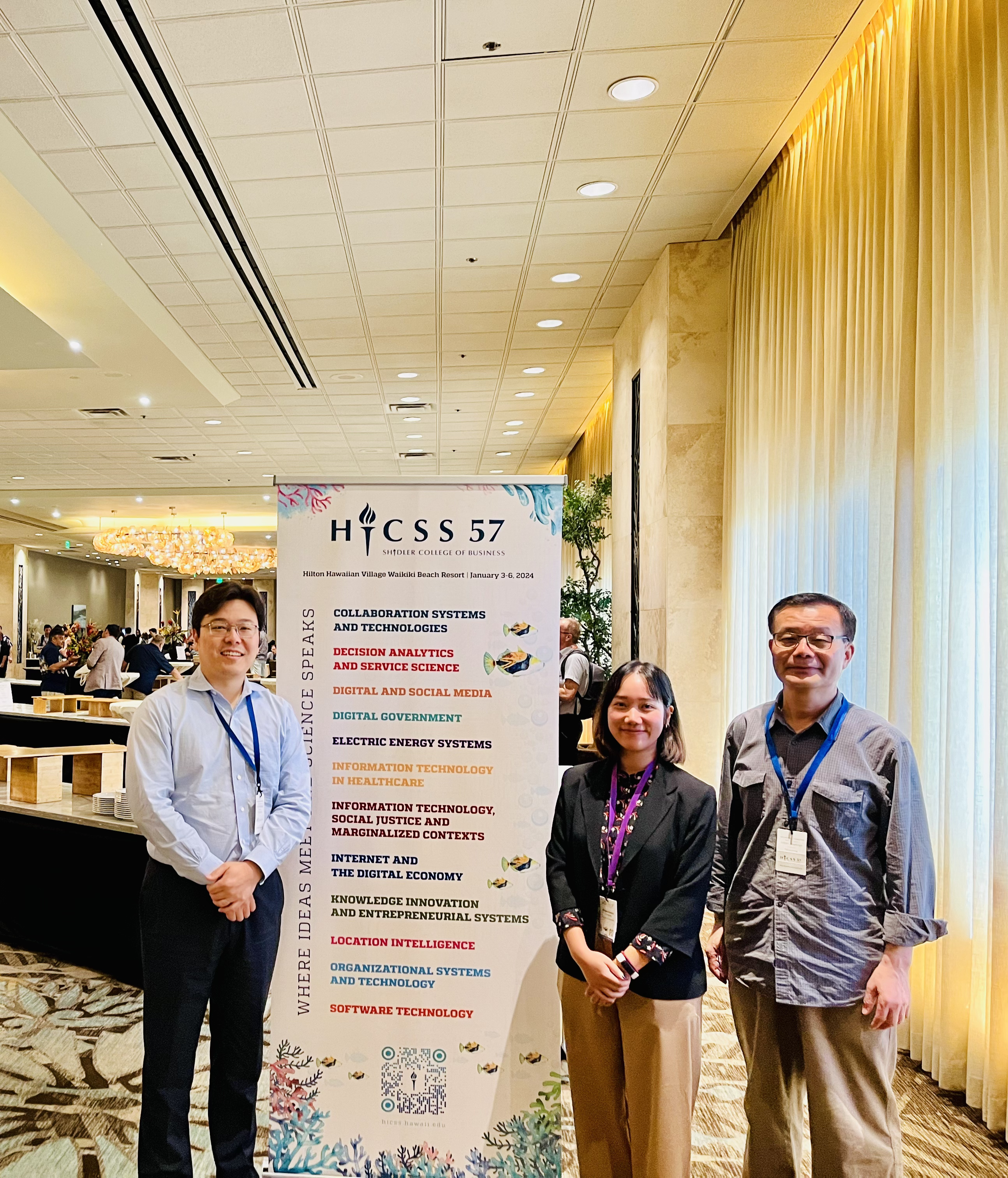
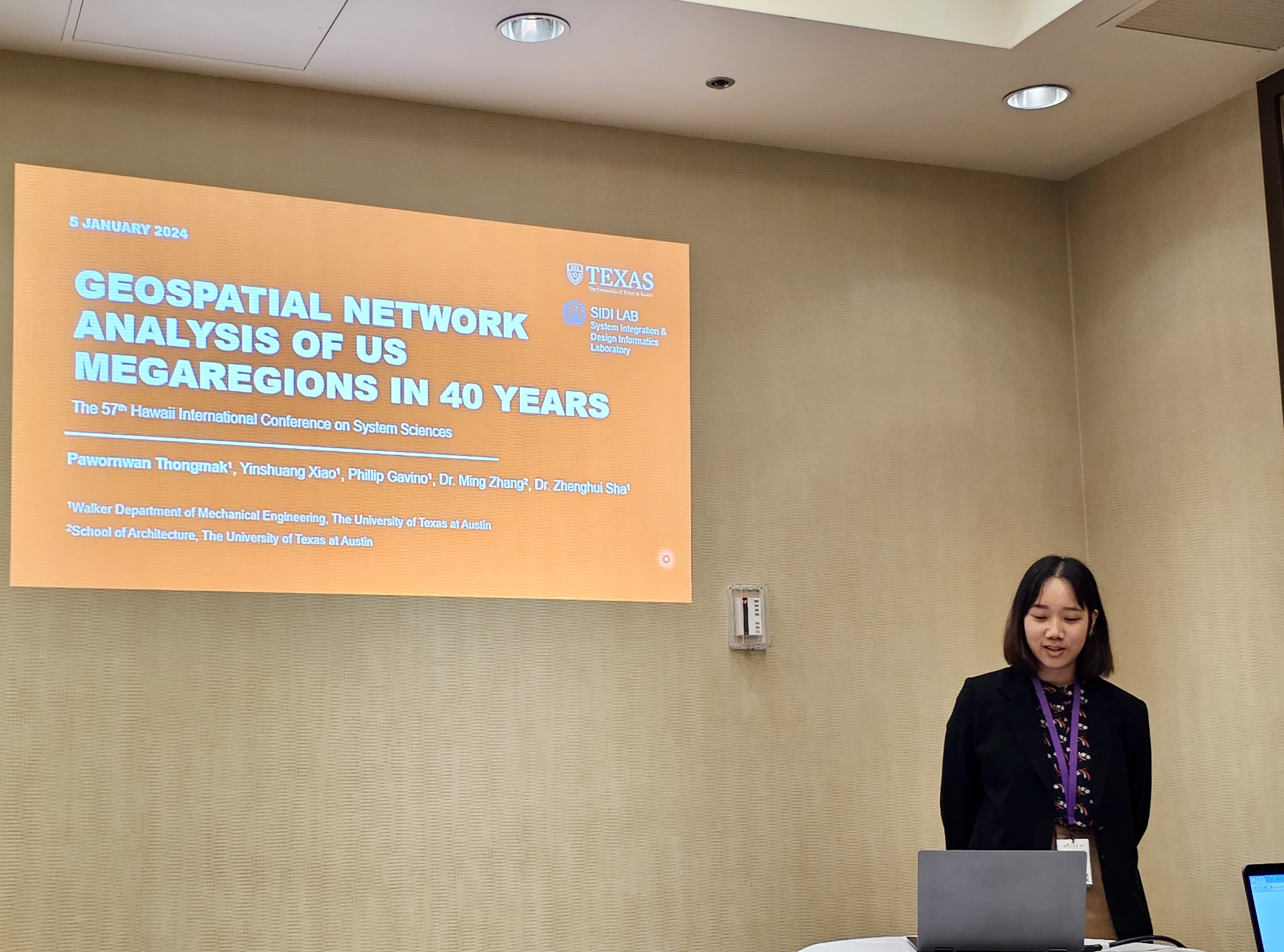
Dr. Zhenghui Sha and the PhD student Pawornwan Thongmak attended the 57th Hawaii International Conference on System Sciences (HICSS) and presented the work, Geospatial Network Analysis of US Megaregions in 40 Years, led by the authors, P. Thongmak, Y. Xiao, P. A. Gavino, M. Zhang, and Z. Sha. By collaborating with Dr. Ming Zhang, the Director of Cooperative Mobility for Competitive Megaregions (CM2) (a University Transportation Center (UTC) at UT Austin funded by the Department of Transportation), we use network analysis approaches and models to gain insights into the evolution of megaregions, complex urban systems that “contain two or more roughly adjacent urban metropolitan areas that, through commonality of systems—of transport, economy, resources, and ecologies—experience blurred boundaries between the urban centers, such that perceiving and acting as if they are a continuous urban area is, for the purposes of policy coordination, of practical value” [Defining U.S. Megaregions].

In particular, this paper proposes a network analysis framework based on geographic information systems (GIS) to study the development of megaregions in support of urban planning and policy-making. The framework includes a new approach to model geo-shaped polygon data of census places as the Place Geo-Adjacency Network (PGAN). In particular, the integration of descriptive network analysis and degree distribution analysis supports the study of spatial connections, geospatial growth, hub effects, and expansion patterns in megaregions. To demonstrate this framework, a case study was conducted on four US megaregions to study their growth and expansion in the last 40 years since 1980. The degree distribution analysis captures the small-world property and quantifies the level of geospatial connectivity influenced by the hub effects. Policymakers can use the model as a decision support for urban planning and policy design to reduce disparities and improve connectivity in megaregion areas.

SiDi Lab Received Funding Support from AFOSR

Sha and Bayrak received a ~$675,000 award from the Air Force Office of Scientific Research for their proposal entitled “Trust, Rationality, and Robust Decision-making Under Competition in Human-Human and Human-AI Teams”. The goal of this project is to enable intelligent machines to perform as true “teammates,” adapting their behavior to accommodate changes in complex environments, as well as augmenting the performance of human teammates when needed. The objective is to investigate sequential human decisions in competitive teams in the presence of uncertainties due to incomplete and imperfect information. See the story from UT ME News for details.

SiDi Lab Receved A New NSF Award

SiDi Lab was recently awarded by the National Science Foundation to support their investigation on the impact of information uncertainty on design rationality under competition among teams and to develop a competition-aware artificial intelligence (AI) assistant for future human-AI collaboration in design space exploration. This project, titled “Design Decisions under Competition at the Edge of Bounded Rationality: Quantification, Models, and Experiments,” is a collaborative research project with Dr. Alparslan Emrah Bayrak from the Stevens Institute of Technology. Dr. Bayrak will lead a sub project from Stevens and collaborate with Dr. Sha from UT Austin to address two fundamental issues in engineering design: design rationality and decision-making under competition.

Abstract:

The objective of this project is to investigate the impact of information uncertainty on design rationality under competition among teams and to develop a competition-aware artificial intelligence (AI) assistant for design space exploration and exploitation. Communication issues have been broadly recognized as a critical factor that impacts design outcomes in team decisions, because the information shared during communication can be incomplete and imperfect. Therefore, addressing such issues by understanding the role of information uncertainty on human design decisions in teams could lead to better coordination of team decisions, advancement in human-AI collaborations, and significant cost savings in large-scale engineering design projects. However, despite the significant progress in modeling design decision-making in teams, current literature neglects two fundamental aspects of the design process: human designers have bounded rationality, and most design activities happen under competition, whether consciously or unconsciously. This project is motivated to fill this gap by developing theoretical and experimental constructs to computationally model human designers’ sequential decisions in a competitive environment and to experimentally measure their bounded rationality. The expected outcome is a suite of new knowledge, including metrics, models, algorithms, and testbeds, on human behavior in design teams under competition in the presence of uncertainties. Broader impacts will be generated by directly engaging diverse undergraduate students in research activities through the Freshman Introduction to Research in Engineering (FIRE) program at the University of Texas at Austin and the Pinnacle and Clark Scholars programs at Stevens Institute of Technology.

This project is driven by answering two research questions: 1) what are the effects of information uncertainty (e.g., when design information shared between team members is incomplete) on design rationality under competition among teams? 2) How would such effects differ across a wider range of team sizes? To answer the two questions, an interdisciplinary research approach is planned that combines descriptive, prescriptive, and predictive analytics. In particular, we will develop game theoretic models to model sequential design decisions under competition, synergistically integrating two types of sequential learning models, i.e., theory-driven prescriptive models (e.g., Bayesian optimization) and data-driven predictive models (e.g., long-short term memory units). The new approach explicitly models designers? perceptions of their opponents? past performance and predicts the opponent?s future decisions, thereby providing a quantitative way to study the influence of uncertain information shared among designers in a team on their decisions in competition against other teams. Experiments will be conducted to collect behavioral data to study how human irrationality, benchmarking on rational behaviors predicted by the theoretical models, would change over time during the course of the design competition. The research findings will be validated in a real-world design challenge on solar system design, where multiple teams compete for awards. To benefit a broader research community, this project will build an open design infrastructure to share the project data and findings.

2023 IDETC/CIE Conference Takeaways

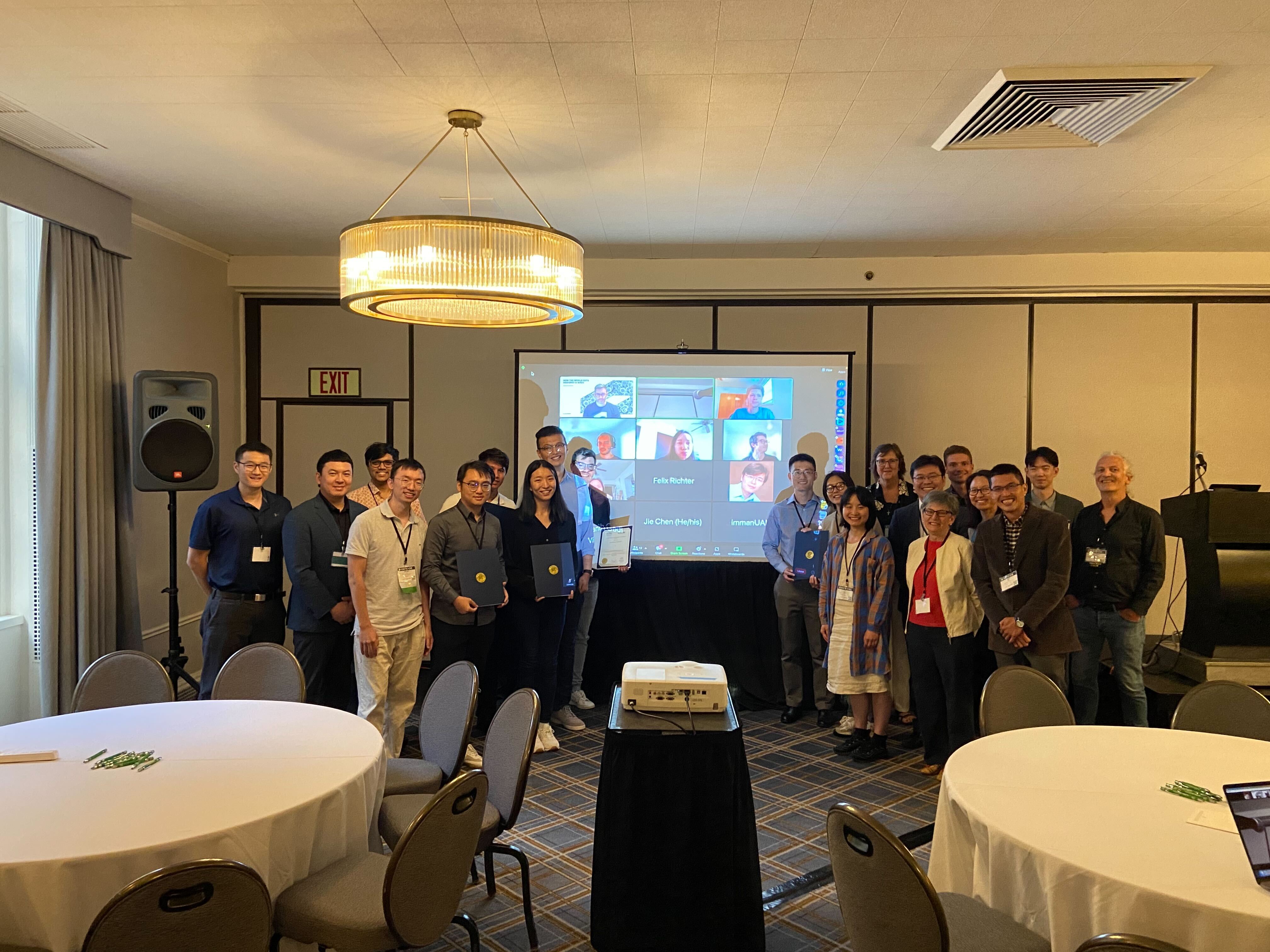
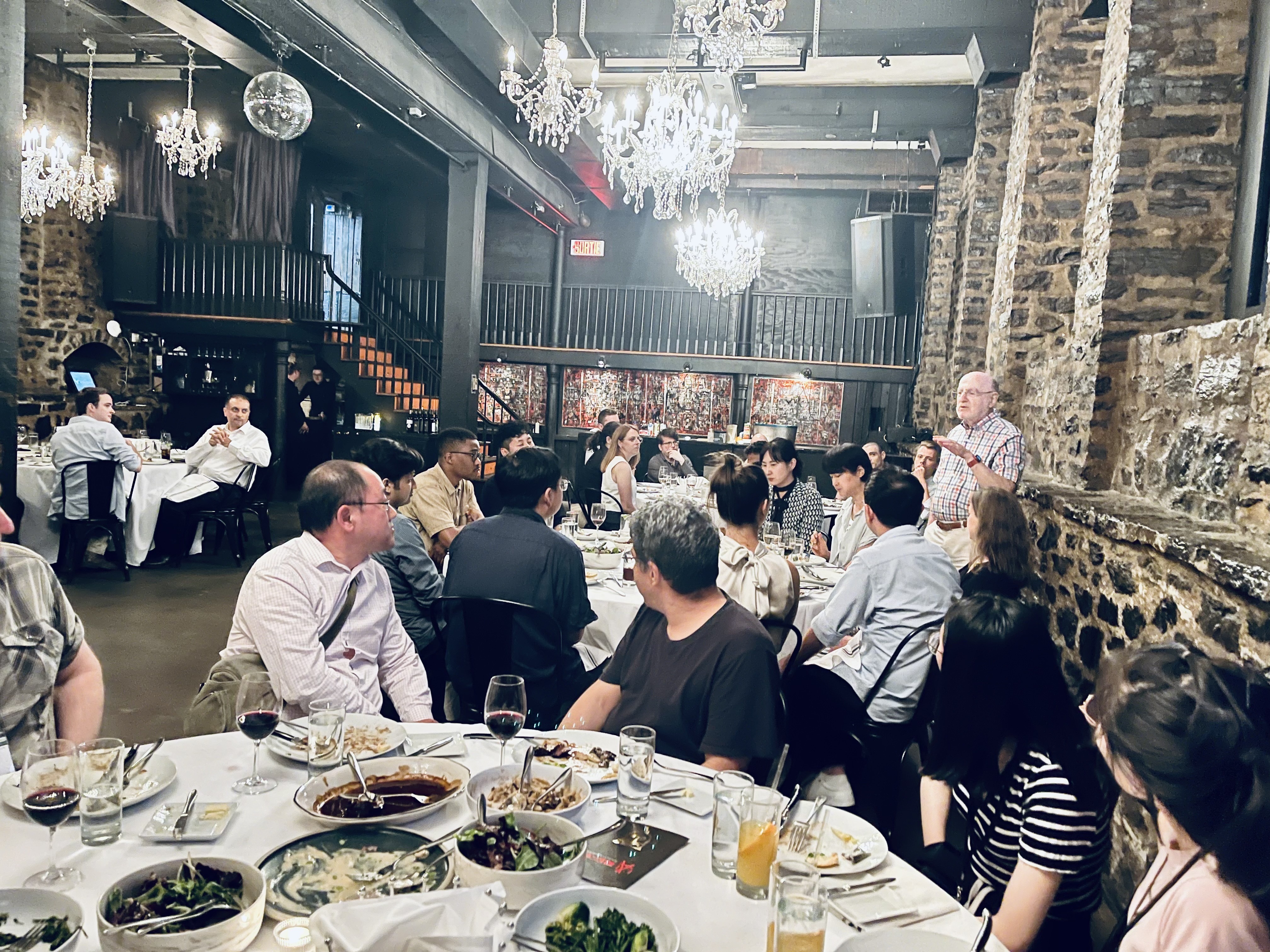
It was again a successful conference for design engineers and researchers to gather together in Boston this year exchanging ideas and sharing their most recent work and discoveries. Good memories collected!

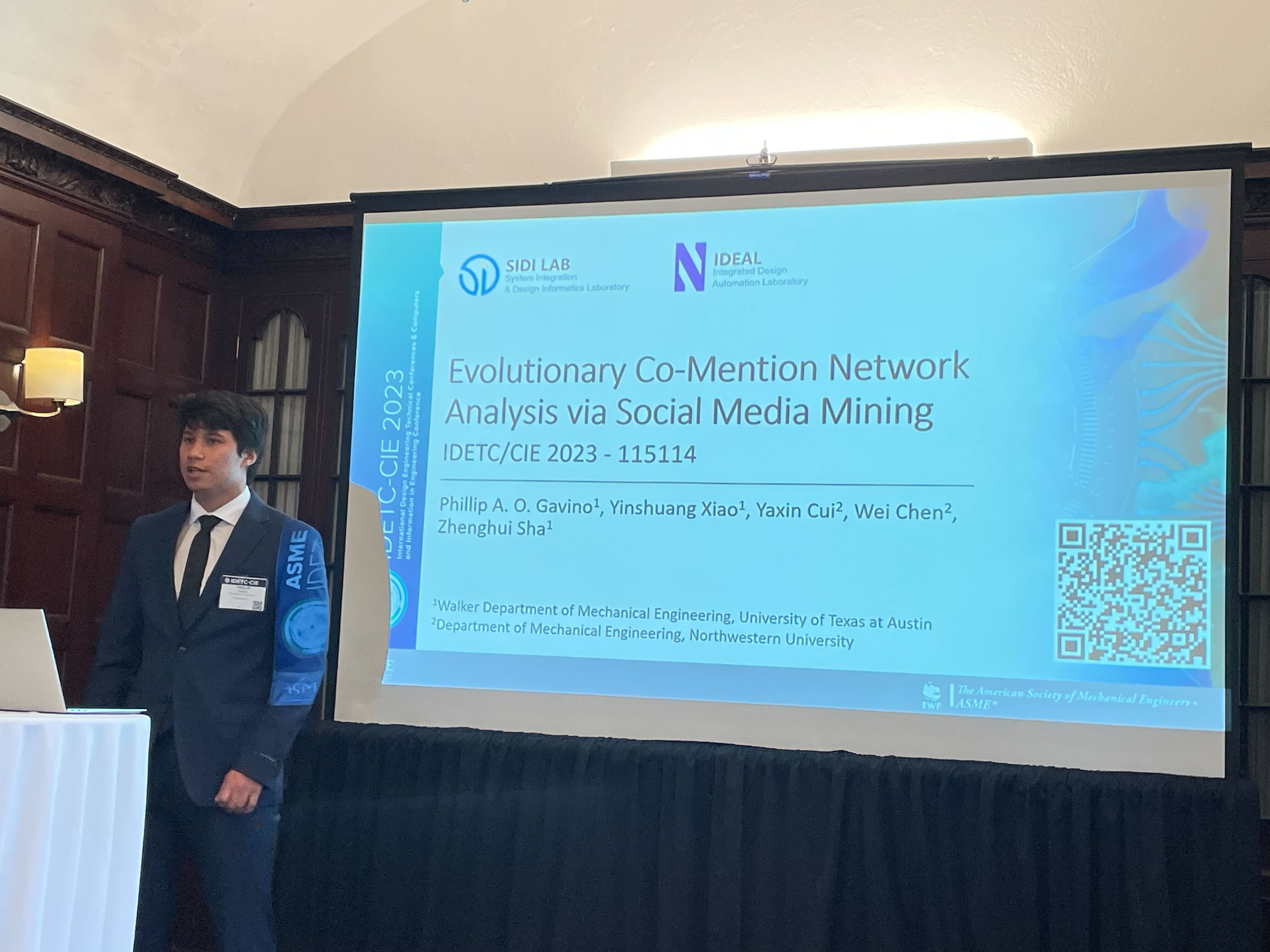
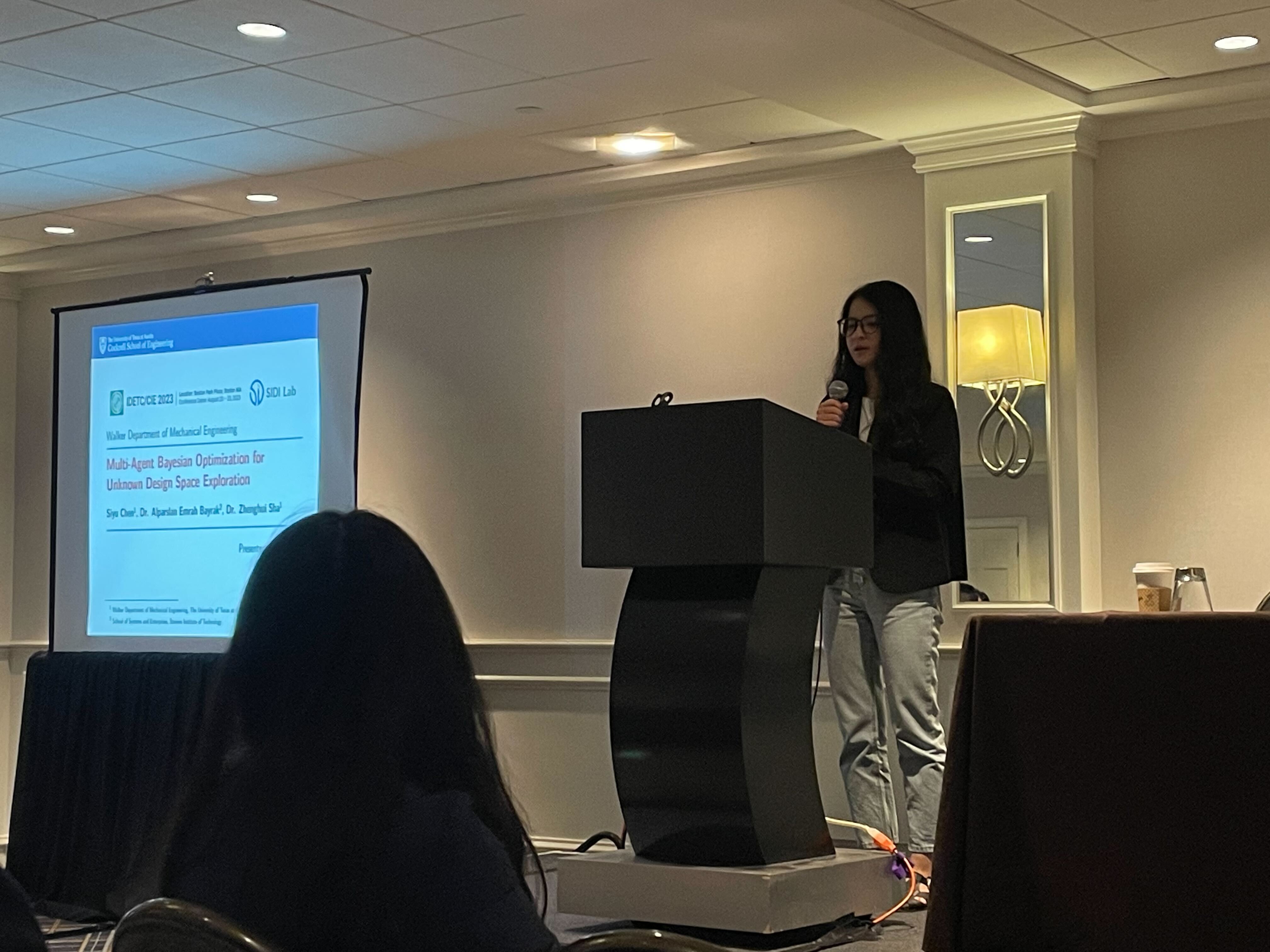
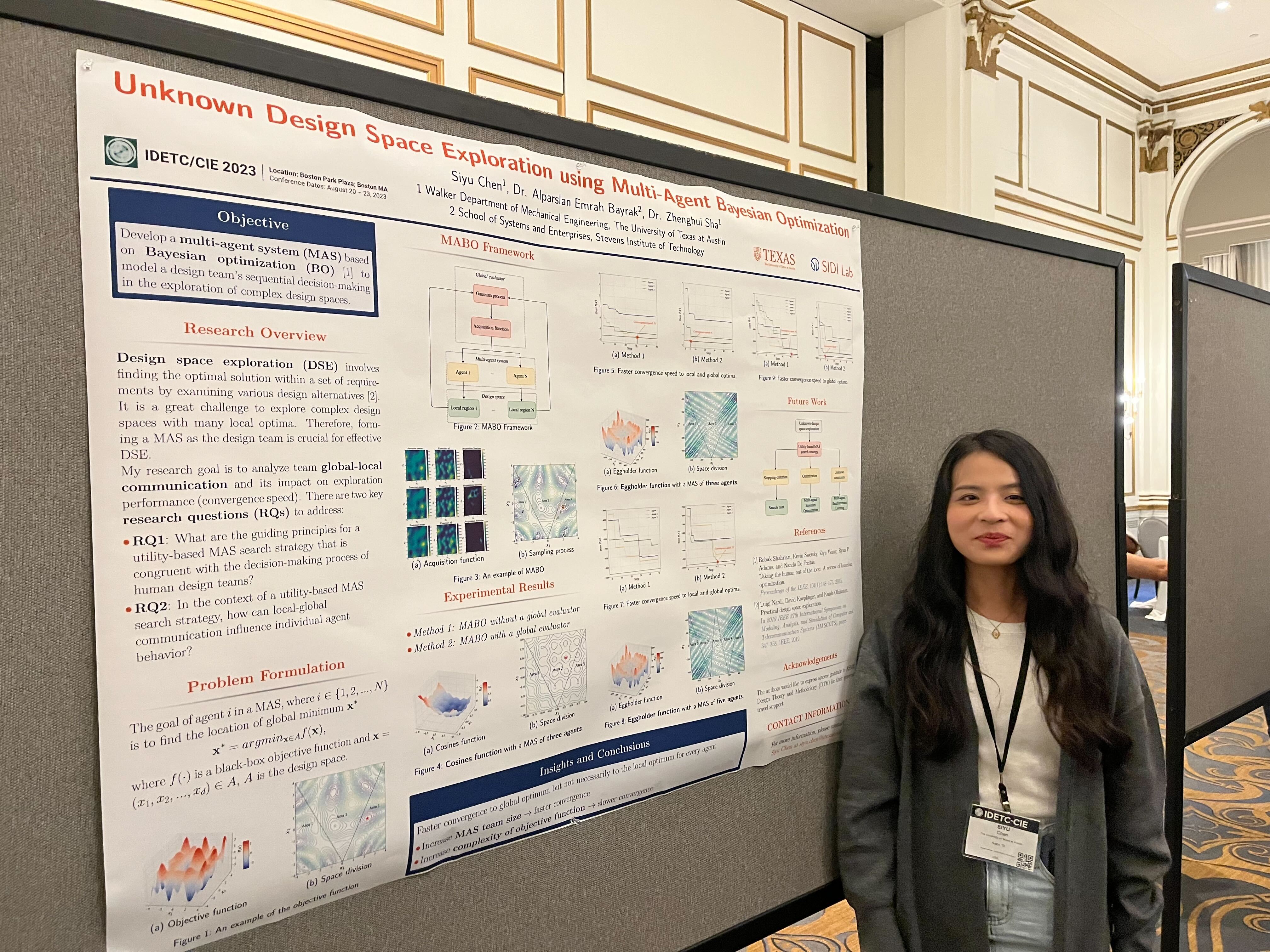
SiDi Lab had four students attended the conference this year and presented the following three papers:

We were also glad to work with Dr. Kentaro Yaji’s group from Osaka University to report the work on multifidelity topology design at this year’s conference.

We would like to take the opportunity to congratulate the following SiDi Lab members on receiving competitive awards from various activities organized at the conference.

Lastly, I am very happy to see the reunion of ASME Hackathon Committee members and the growth of ASME Hackathon community. We look forward to the 2024 hackathon in Washington DC.

SiDi Students Won Several Awards Recently. Congratulations!

Congratulations to the following SiDi students on winning competitive and pretigous awards. Well-deserved!

Xingang Li: Philip C. and Linda L. Lewis Foundation Graduate Fellowship, awarded by the Cockrell School of Engineering at UT Austin

Phillip Gavino: Travel Award, 2023 ASME Undergraduate Poster Session on Dynamics, Vibration & Acoustics, awarded by The American Society of Mechanical Engineers (ASME) Design Engineering Division (DED)

Phillip Gavino: Robert L. Mitchell Friend of Alec Excellence Fund Scholarship, awarded by the Cockrell School of Engineering, UT Austin

Siyu Chen: NSF Travel Award, The 2023 Frontiers in Design Representation (FinDeR) Summer School held at the University of Maryland, College Park, awarded by the National Science Foundation

Siyu Chen: Travel Award for Top-10 Abstracts, 2023 DTM Student Poster Session, awarded by The American Society of Mechanical Engineers (ASME) Design Theory and Methododology (DTM) Technical Committee

Ronnie Stone: Travel Award, The ASME-CIE Graduate Research Poster Session, awarded by The American Society of Mechanical Engineers (ASME) Computers and Information in Engineering Division (CIE)

Ronnie Stone: 2023 NSF SFF Registration Fee Waiver Award, The Thirty-Fourth Annual International Solid Freeform Fabrication Symposium

Vanishree Shanmugasundaram: Freshman Introduction to Research in Engineering (FIRE) Research Scholarship, awarded by the Walker Department of Mechanical Engineering, UT Austin

Pawornwan Thongmak, Graduate Dean’s Prestigious Fellowship Supplement, awarded by the Graduate School, UT Austin

SiDi Research for Local Community – An Outreach Visit To Kealing Middle School

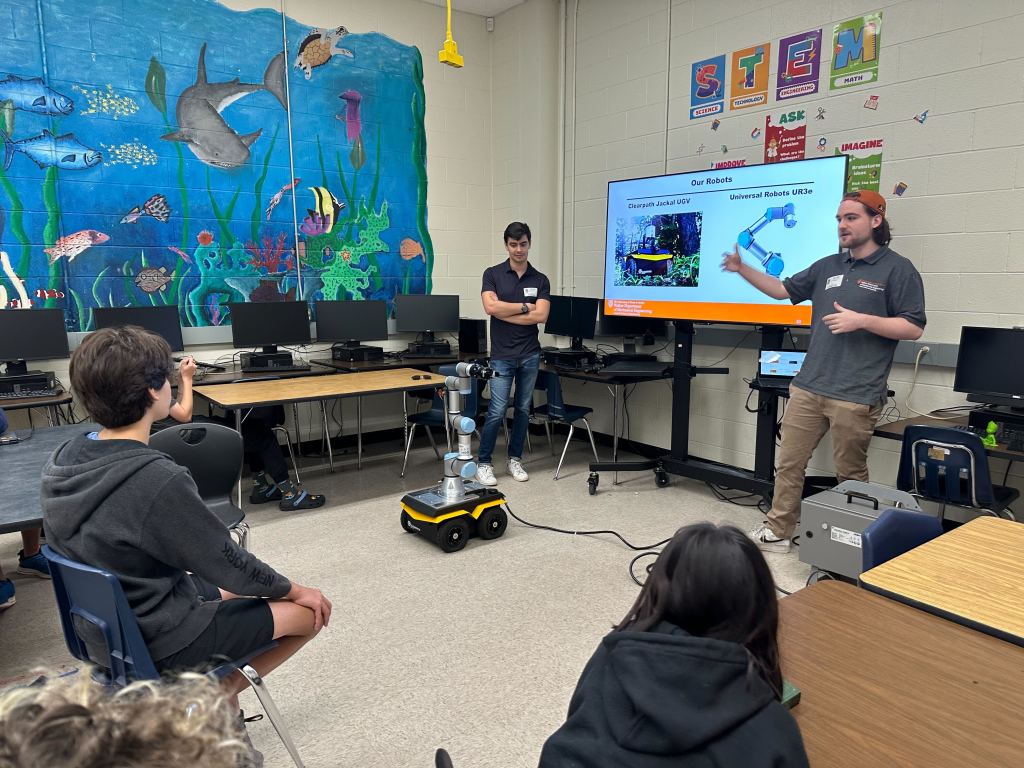
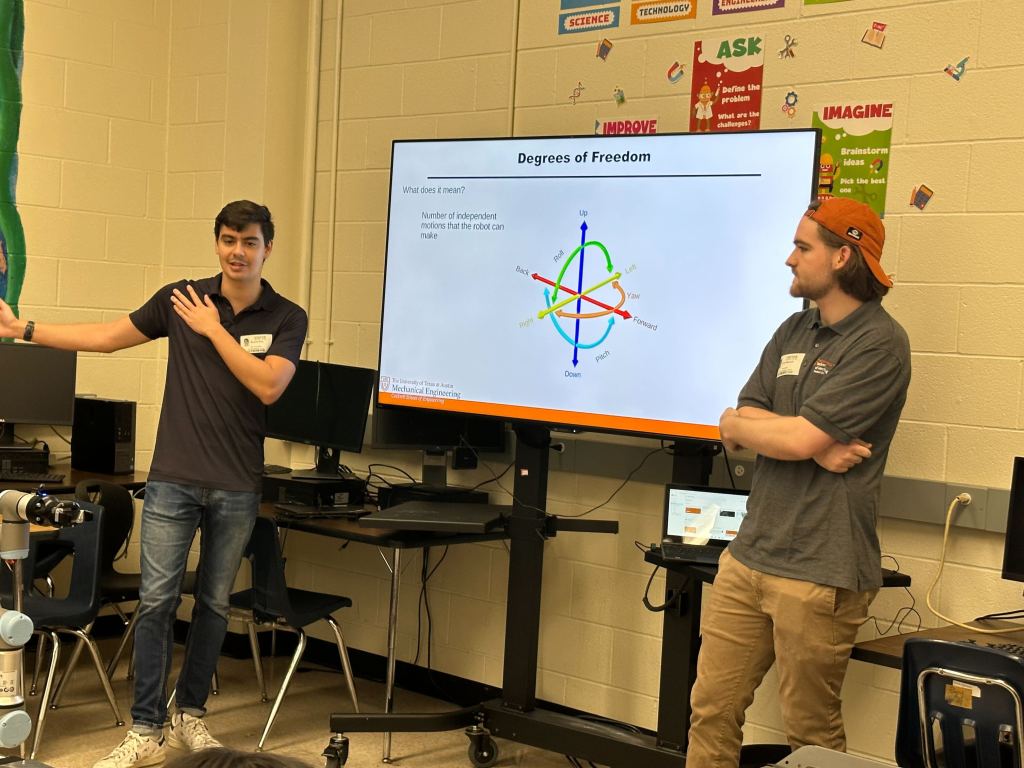
SiDi students, Ronnie Stone and Cole Mensch, provided a fun lecture to the students at Kealing Middle School to show the application of robotics in manufacturing and how the design of complex robotic systems can impact our daily lives. They demonstrated SiDi’s recent resarech outcomes of the Swarm Manufacturing project to the students and had a insighful discussion and communication in the class. Enjoy some photos and videos taken by Kiersten Fernandez, our Outreach Program Coordinator in the Cockrell School’s Diversity, Equity, and Inclusion Office.


DOT Support to Investigate Uban Expansion in Texas Triangle Megaregion Using Network Science

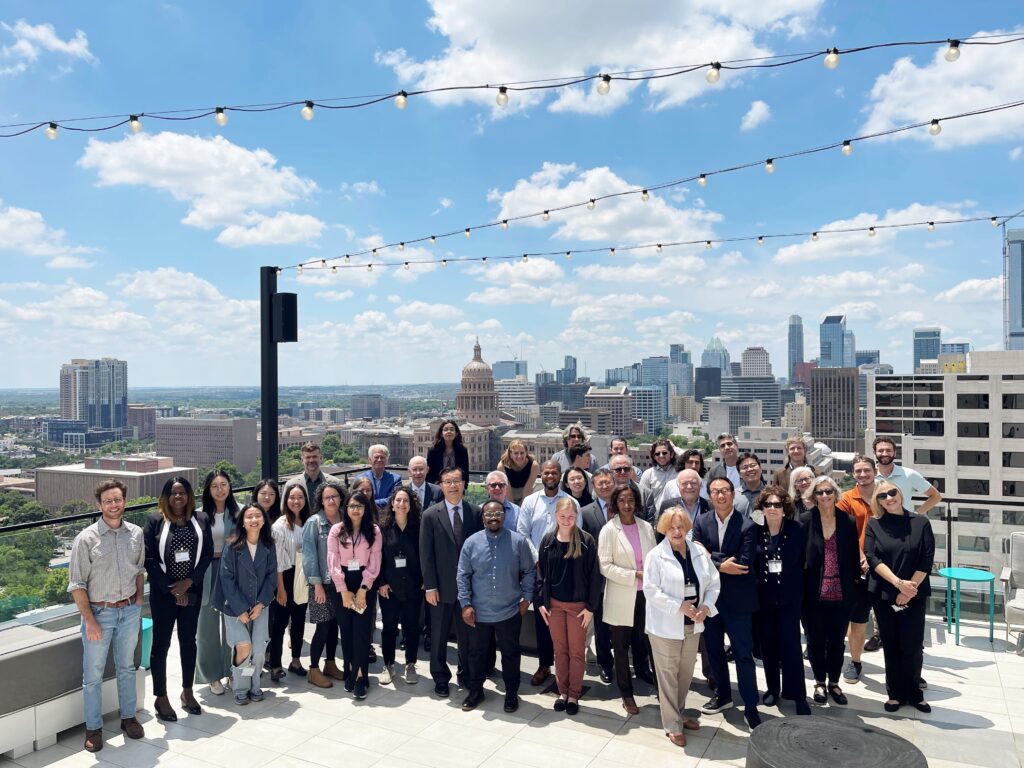
Dr. Sha was recently invited to participate in the Annual Summer Forum held by The Cooperative Mobility for Competitive Megaregions (CM2) consortium at UT Austin. The multidisciplinary view fostered by the center was fascinating, and it was exciting to see how researchers from different fields integrate theories to tackle some of the most challenging problems in complex urban systems and future smart cities and mobility.

SiDi Lab received funding from the Department of Transportation (DOT) through the CM2 center to investigate the complex urban system and its expansion in the Texas Triangle of Dallas-Austin-Houston, one of the fastest-growing megaregions in the United States. In particular, the objective is to develop a complex network-based analysis framework in support of the investigation of the co-evolution of cross-system interactions (e.g., urban networks and transportation networks) in the Texas Triangle megaregion.